Can goldfish live with betta fish?
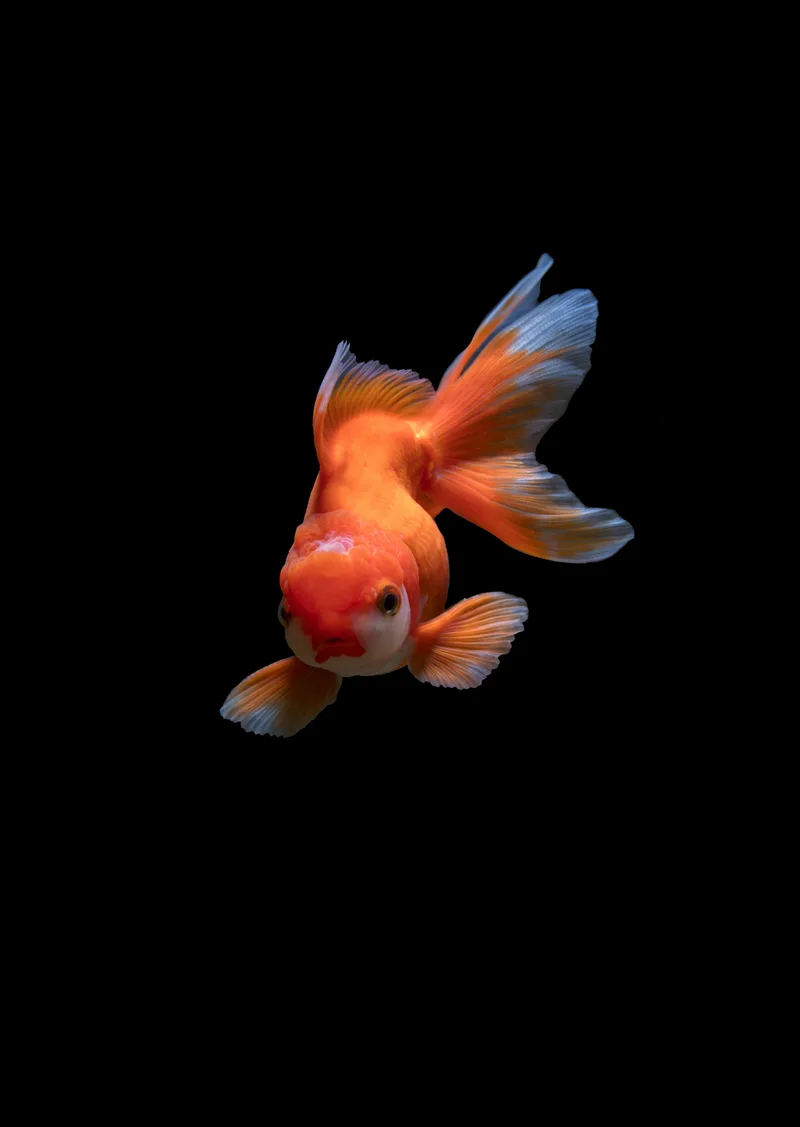
No, goldfish and betta fish shouldn't live together, and the betta's famous temper is not the reason why. Even if the two never so much as glanced at each other, the pairing would still fail, because a goldfish is a coldwater fish and a betta is a tropical one, and no single water temperature is genuinely comfortable for both. That's also why the popular workaround, pairing a slow and peaceful fancy goldfish with a betta, doesn't hold up: it solves the fight that was never the real problem.
What Actually Happens If You Keep Them Together?
If both fish are in one tank right now, neither one is in immediate danger. But one of them is always living in the wrong water, and the damage builds quietly over weeks and months.
Say the heater is set for the betta, somewhere in the 78 to 82°F (25 to 28°C) range. The goldfish in that water runs a faster metabolism than its body is built for. It eats more, produces more waste, burns through oxygen faster, and puts steady strain on its organs. Nothing dramatic happens in week one. That's exactly why the mismatch gets missed: the tank looks fine while the wear accumulates underneath.
Now flip it. Set the tank to goldfish-friendly water, 65 to 72°F (18 to 22°C), and the betta's metabolism slows to a crawl. It sits low in the tank, moves less, eats poorly, and its immune system weakens. Cold bettas are noticeably more prone to fin rot and other infections, because the body doesn't have the energy to fight anything off.
The fix is separation, as soon as you can manage it. The betta goes in its own heated tank, the goldfish in its own unheated (and larger) one. Until then, watch for these signs that the mismatch is already taking a toll:
- Betta: clamped fins. Fins held tight against the body instead of flowing open is one of the earliest signs of cold stress.
- Betta: sluggishness and poor appetite. A cold betta hovers near the bottom and ignores food it would normally take instantly.
- Betta: fraying fin edges. Ragged or discolored fin edges in cool water often mean fin rot is starting.
- Goldfish: faster gill movement. Warm water holds less oxygen while raising the fish's demand for it, so you'll see quicker, heavier breathing.
- Goldfish: cloudy or deteriorating water. A warm goldfish produces more waste, and a tank sized for a betta usually can't process it, so ammonia climbs.
If you're seeing any of these, don't wait for a second tank to be perfect. Even a basic temporary setup in the right temperature range beats a shared tank in the wrong one.
Why Doesn't One Tank Temperature Work for Both?
Because the two fish were shaped by opposite kinds of water, and their bodies still run on those settings.
Goldfish (Carassius auratus) were domesticated from Prussian carp in the temperate waters of China, where seasons swing cool. Everything about a goldfish, from its metabolism to its oxygen needs, is tuned for cool water. That's the whole reason goldfish are kept without a heater: roughly 65 to 72°F (18 to 22°C) is where their body works as designed.
Bettas (Betta splendens) come from the other end of the spectrum: warm, shallow, stagnant rice paddies and pools in Southeast Asia, water that hovers around 78 to 82°F (25 to 28°C) year-round. A betta's body expects that warmth constantly. There's no cool season built into its design.
Did you know? The betta's labyrinth organ, the structure that lets it gulp air at the surface, is an inheritance from ancestors in warm, oxygen-poor water where gills alone weren't enough. The same organ that lets a betta survive in a cup at the store is a clue to how differently it's wired from a goldfish, which is built for cool, oxygen-rich water.
Put the two ranges side by side and there's no real middle. Set the tank to 75°F and you haven't found a compromise, you've found a temperature that mildly stresses both fish at once. And temperature is only the start of the mismatch:
| Goldfish | Betta | |
|---|---|---|
| Temperature range | 65-72°F (18-22°C) | 78-82°F (25-28°C) |
| Minimum tank size | 20+ gallons (75+ liters) for a fancy variety | 5 gallons (19 liters) |
| Waste and filtration | Very heavy waste producer; needs strong filtration | Light waste; modest filtration, gentle flow |
| Typical lifespan | 10-15 years, often longer | 3-5 years |
A goldfish isn't just a cooler-water betta. It's a far messier fish, several times larger at adulthood, and built to outlive the betta three times over.
Does a Slow-Moving Fancy Goldfish Change the Math?
The idea sounds reasonable: a round-bodied fancy goldfish like an oranda, ryukin, or black moor swims slowly and minds its own business, so it won't chase, nip, or out-compete a betta the way a fast common goldfish or comet would. And that part is true. If temperament were the whole question, a fancy goldfish would be the least bad option.
But temperament isn't the part doing the damage. A calm goldfish in 80°F water is still a coldwater fish running too hot, and a betta sharing a cool goldfish tank is still a tropical fish running too cold. Picking a slower goldfish changes which fish annoys the other. It does nothing about which fish is being slowly worn down by the water itself.
The tank math doesn't improve either. A single fancy goldfish needs 20 gallons or more and serious filtration to handle its waste. A typical betta setup is a fraction of that. Whichever fish the tank was sized for, the other one is shortchanged.
The reasoning is fixable, though. You're right to match tank mates by temperament and speed. Just do it inside a temperature range, not across one. Pick the water that fits your goldfish, then choose calm companions from fish that thrive in that same cool water. The betta gets the same treatment in its own warm tank.
What Should You Keep With Each Instead?
Each fish does well with company chosen for its own water. A goldfish tank has good options among other coldwater species, and fish that go well with goldfish share its cool range and can keep pace with its appetite at feeding time. Just as useful is knowing which pairings fail, since what not to put with goldfish includes more species than most people expect, tropical fish like the betta among them.
The betta, in its own heated tank, pairs well with small, peaceful tropical fish like pygmy corydoras or kuhli loaches, or with snails and shrimp if the tank is big enough.
However you stock the two tanks, the dividing line between these fish was never about temperament. It comes down to a thermostat setting, decided by where each fish's ancestors lived, an ocean apart. Choose tank mates that share the water, and most compatibility questions answer themselves.