What plants can goldfish not eat?
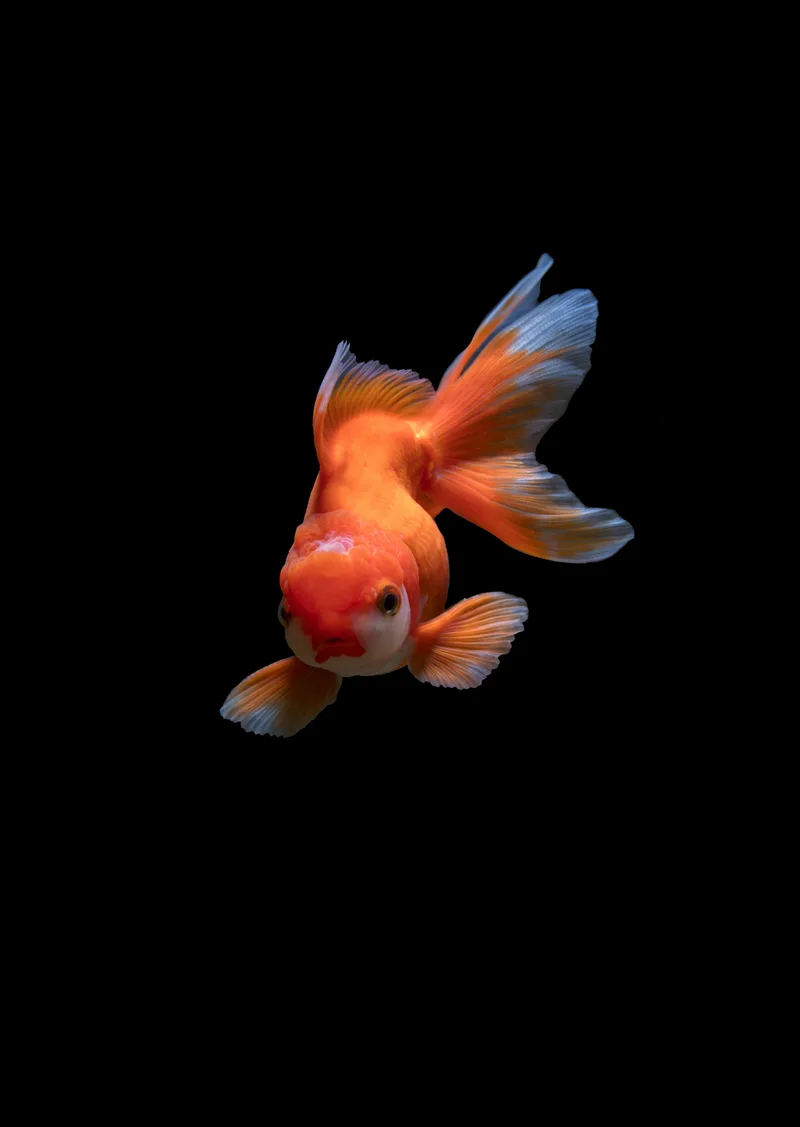
No aquarium plant is fully goldfish-proof, but five species reliably survive a goldfish tank: anubias, java fern, hornwort, crinum calamistratum, and marimo moss balls. They share three defenses: tough leaves, rhizomes that attach to wood or rock instead of rooting in substrate, or fine needles too stiff to chew. The complication is that "goldfish" hides two very different fish inside it. A round, slow-swimming fancy oranda and a torpedo-shaped comet will behave so differently around the same plant that the list above changes shape depending on which one you keep.
Anubias
Anubias is the hobby's first answer to a goldfish-proof plant, and for good reason. It's a slow-growing rhizome plant from streams in West Africa, with several species in regular trade: Anubias barteri, Anubias nana, the coffeefolia form, and Anubias congensis.
Two things make goldfish leave it alone. The leaves are thick and leathery, more like a houseplant than a tender stem plant, so a curious nibble doesn't go anywhere. And the rhizome (the thick horizontal stem the leaves grow from) has to be tied to wood or rock and never buried, which removes the soft anchored base goldfish usually dig at when they wreck a tank.
In practice, you tie or glue it to a piece of driftwood or a chunk of lava rock and set it in the tank. It does not need a substrate at all. It does not need much light, which is convenient since goldfish tanks tend to be lit at the lower end to discourage algae. The larger varieties (barteri and coffeefolia especially) take goldfish abuse better than the small petite forms of nana, which are easier to dislodge and easier to overlook when a goldfish decides to rearrange the tank.
Java fern
Java fern (Microsorum pteropus) is the other near-universal recommendation, and it works on the same principle as anubias with one extra defense. It's a rhizome plant from Southeast Asia that comes in several leaf forms: narrow leaf, windelov (with frilled leaf tips), trident, and needle leaf. All of them behave the same way in a goldfish tank.
The leaves are tough and slightly bitter, which is the part goldfish usually figure out on their own. A goldfish will mouth a new java fern leaf, find it unpleasant, and move on. And like anubias, java fern attaches to hardscape with its rhizome rather than rooting in substrate, so there's nothing for a goldfish to uproot when it goes mining through the gravel.
Tie it to wood or rock with thread or a rubber band until the rhizome grips on its own, which takes a few weeks. It tolerates very low light. It demands no fertilizer to speak of. Goldfish will occasionally pull at new leaves that are still pale and soft, but established plants almost always recover.
Hornwort
Hornwort (Ceratophyllum demersum) is the fine-leaved exception on the list, and the only one that survives partly by growing back faster than it gets eaten. It's a free-floating stem plant with whorls of stiff, needle-like leaves spaced along the stem, and it has no real roots. It just floats, or you weight one end down.
Two things keep most goldfish off it. The needles are too stiff and spiky to be palatable, so the fish tend to lose interest after a test bite. And hornwort grows fast. Fast enough that any tips a goldfish does manage to strip off get replaced within days, which means even sustained nibbling doesn't kill the plant.
You can let it float at the surface (where it forms a tangled mat that mutes the light and gives goldfish some shade) or weight a stem to the bottom with a plant weight. It has a quietly useful side effect in a goldfish tank: the same fast growth that lets it shrug off nibbling also pulls a lot of nitrate out of the water, which is the waste goldfish produce in volume. Don't panic if a freshly added stem sheds a flurry of needles in the first week. That's the plant adjusting to your water, not dying.
Did you know? Hornwort doesn't have roots at all, not even vestigial ones. Stems anchor by growing modified leaves that imitate roots when buried, but in open water the plant just drifts. It's one of the oldest flowering plant lineages still around, with fossils that look almost identical to the modern plant going back 125 million years.
Crinum calamistratum
Crinum calamistratum is the bulb plant that outlasts a goldfish tank. It's an African bulb plant with long, narrow, dark green leaves that are deeply crinkled along their length, and a mature specimen can throw leaves several feet long. In a goldfish tank, it ends up looking like a clump of dark seaweed waving in the current.
Goldfish leave it alone for two reasons. The leaves are exceptionally tough, more like a strap of plastic than the soft tissue of a stem plant. And the crinkled edges seem to physically discourage biting: a goldfish that gets a mouthful gets a mouthful of crimped rubber, not a leaf tip. The bulb itself sits firm and heavy in the substrate, which means even a determined goldfish has trouble uprooting it.
Plant the bulb half-exposed, with the upper third sitting above the gravel. Give it space. This is a centerpiece plant, not a filler, and a mature one will fill a corner. It establishes slowly: expect a few months before it really takes off. It is a heavier upfront investment than anubias or java fern, but in a tank where most plants get destroyed it tends to be the one still standing five years later.
Marimo moss ball
The marimo (Aegagropila linnaei) is the "no leaves to nip" option. It's a velvety green sphere of filamentous algae from cold northern lakes, strictly speaking not a plant at all, but stocked and sold as one. From a goldfish's point of view, it solves the problem by removing every part of a plant a goldfish usually attacks.
There's no rooted base to dig up. There are no leaves to tear. The dense, felt-like structure of the filaments means a nibbling goldfish gets nothing loose to pull on. Most goldfish end up rolling marimo around the tank like a toy rather than damaging it, which they may do daily and which doesn't hurt the ball.
Set it on the substrate, or wedge it between rocks if you want it to stay put. It prefers cool water and low light, both of which are easy in a goldfish tank. Rinse it in tank water every few weeks and give it a quarter-turn so every side gets light, which keeps the shape even. One honest caveat: a determined goldfish can sometimes shred a small marimo over the course of months, so larger balls (golf-ball size and up) hold up much better than the tiny ones.
Did you know? Marimo aren't a plant species at all. They're a free-floating colonial growth form of a filamentous green alga, Aegagropila linnaei. In their native lakes in Japan and Iceland, gentle currents roll the colonies along the lakebed, which is what shapes them into spheres in the first place. The slow rotation also keeps every side of the ball lit, which is why they grow evenly green all the way around.
How to read this list against your own goldfish
The single biggest variable in whether any of these plants survives is which kind of goldfish is chewing on them, and almost no list says so. Fancy goldfish (oranda, ryukin, fantail, black moor, telescope, ranchu) are slow, round-bodied, weak swimmers. They mouth plants more than they tear at them, often miss what they aim for, and are far easier on a planted tank than they look. Common and comet goldfish are the opposite: torpedo-shaped, athletic, strong-jawed, and capable of destroying almost anything that isn't on this list. A common goldfish in a long enough tank will sometimes uproot crinum out of sheer power. A black moor in the same tank will leave it alone.
The second thing worth knowing is that individual goldfish vary. The honest framing is "these plants survive most goldfish, most of the time," not "guaranteed." If you stock five comets and one of them turns out to be a chronic plant-shredder, no list is going to fix that.
Two practical setup moves carry more weight than the plant choice. The first is to attach your rhizome plants (anubias and java fern especially) to hardscape rather than burying them, since most plant destruction in a goldfish tank is uprooting, not eating. The second is to consider adding hornwort even if you don't love the look. It works as a sacrificial buffer in a way the slower plants can't: the goldfish that wants to chew something will chew the hornwort while the anubias and java fern get on with growing.
| Plant | Why it resists | Best with fancy goldfish? | Best with common/comet? | Attach or plant? |
|---|---|---|---|---|
| Anubias | Thick leathery leaves; rhizome attached to hardscape | Yes | Mostly yes (use the larger barteri and coffeefolia forms) | Attach to wood or rock |
| Java fern | Tough, slightly bitter leaves; rhizome attached to hardscape | Yes | Yes | Attach to wood or rock |
| Hornwort | Stiff, spiky needle-leaves; fast regrowth | Yes | Yes (also acts as a sacrificial buffer) | Float or weight a stem |
| Crinum calamistratum | Strap-tough crinkled leaves; heavy anchored bulb | Yes | Mostly yes (very strong commons can sometimes uproot it) | Plant the bulb half-exposed |
| Marimo moss ball | No leaves or roots to attack; dense filament structure | Yes | Yes (use larger balls) | Set on substrate |
A planted goldfish tank is achievable, but the trick isn't finding plants goldfish "can't eat." It's matching plant toughness to your particular goldfish, with the understanding that a fancy in a community tank gives you most of the planted-aquarium options the hobby has, while a strong comet narrows the list to the truly bulletproof. Most of the damage goldfish do to aquarium plants is mechanical (uprooting, mouthing, redecorating) rather than actual eating, which is why attaching plants to hardscape solves the problem more often than picking a "safer" species does. Plenty of other hardy aquarium plants suited to a goldfish tank (vallisneria, certain crypts, bolbitis) survive a fancy goldfish, even if they wouldn't make a list this strict. Even at the narrow end, a planted goldfish tank looks good, gives the fish something to root around in, and pulls a useful amount of nitrate out of the water the goldfish keep producing. It's worth the trouble even if it takes a couple of tries to find the right mix.