Are floating plants good for goldfish?
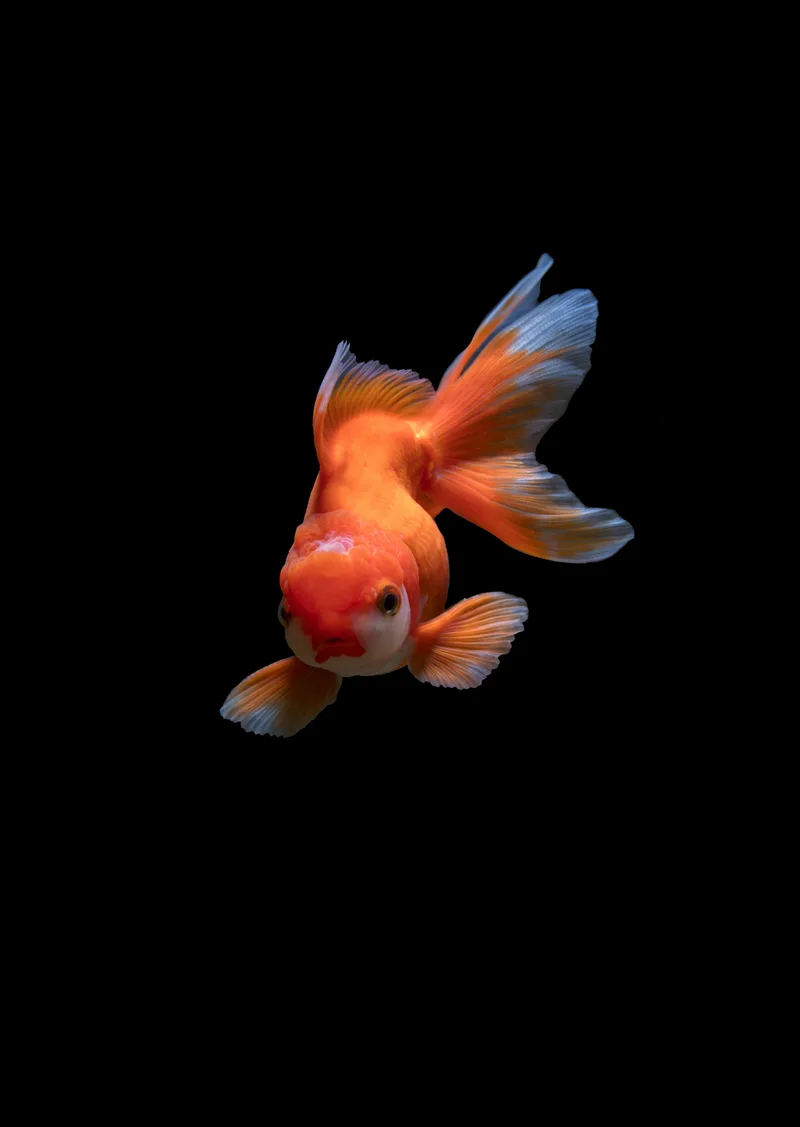
Yes, and they're one of the only plant categories that actually fits a goldfish tank rather than tolerating it. Floating plants sidestep the two things goldfish do that kill most planted setups: they don't root in the substrate, so the digging stops mattering, and the floaters worth keeping grow fast enough that constant nibbling becomes a trim instead of a wipeout. The catch is that not every floater can keep pace. Drop in duckweed and a goldfish gives you a self-replenishing mat; drop in amazon frogbit and the same fish strips it bare inside a week.
Why are floating plants actually a good match for goldfish?
Goldfish kill most plants for two reasons, and floating plants happen to be immune to both.
The first is the digging. Goldfish forage at the substrate constantly, mouthing gravel, scattering sand, and pulling up anything anchored in it. A rooted plant in a goldfish tank usually fails before it gets a chance to grow. It goes in on Saturday, gets uprooted by Tuesday, and floats around the tank until it rots. Floating plants don't care. Their roots dangle in open water with nothing for the fish to dig up.
The second is the growth rate. Goldfish are foraging omnivores and they nibble plants all day. A slow-growing plant can't replace tissue as fast as a goldfish removes it, so it loses leaf area until there's nothing left. Floating plants that work in this setup are the species that grow back faster than the fish can eat them. The grazing still happens, but it never gets ahead of the regrowth.
Did you know? Duckweed (Lemna minor) doubles its biomass roughly every two days under decent light. That's one of the fastest growth rates of any flowering plant on Earth, and it's the only reason it survives a goldfish tank: the fish can't eat it as fast as it reproduces.
There's a bonus the floating-plant category delivers that no rooted plant can match in a goldfish tank. Goldfish are a high-bioload fish, producing far more ammonia and nitrate than a typical tropical setup. Floaters sit at the surface with their leaves in air and their roots in nitrate-rich water, which is exactly where a fast-growing plant wants to be. They strip nitrates faster than submerged plants do, which keeps water-change pressure lower. They also shade the surface, which suppresses the algae blooms that a brightly lit, nitrate-heavy goldfish tank otherwise invites.
Which floating plants actually survive goldfish?
The reliable list is shorter than it first looks, and it sorts cleanly by regrowth rate versus bite rate.
Duckweed (Lemna minor) is the default for a reason. Each frond is small enough that a goldfish can swallow it whole, and the fish will eat it constantly. The plant survives because it reproduces faster than the fish can graze. Treat duckweed as a supplemental food crop more than a decorative plant; you're farming it as much as keeping it. If aesthetics matter, this is the wrong floater.
Water lettuce (Pistia stratiotes) is the larger, more controllable answer. The leaves are too thick for an adult goldfish to bite through, so the fish nibbles the dangling roots instead. The roots regrow, the plant keeps its shape, and you end up with a recognizable rosette floating on the surface rather than a green carpet. This is the floater to reach for when you want a planted look rather than a feeding station.
Salvinia and azolla (fairy moss) sit between the two. Both are small floaters, but both reproduce quickly enough that grazing rarely wins. Salvinia leaves are slightly fuzzy and less appealing to nibble than frogbit, and azolla reproduces almost as fast as duckweed. They do best in calmer corners where the goldfish doesn't push them around the tank.
Amazon frogbit (Limnobium laevigatum) is where the answer splits by goldfish size. It works for juveniles and fails for adults. The leaves are large and tender, the roots are long and easy to grab, and a full-grown goldfish will strip a frogbit raft within a week. If your fish is still small, you can get a season out of it. If you have an adult comet, skip it.
Water hyacinth is a pond plant indoors. It survives goldfish easily outdoors where it gets full sun and constant warmth, but in a home tank it usually starves to death from low light before the fish ever becomes the problem.
| Plant | Survives an adult goldfish? | Why |
|---|---|---|
| Duckweed | Yes | Reproduces faster than the fish can eat it |
| Water lettuce | Yes | Leaves too tough to bite through; roots regrow |
| Salvinia | Mostly | Reproduces quickly; depends on goldfish size and tank flow |
| Azolla (fairy moss) | Mostly | Reproduces almost as fast as duckweed |
| Amazon frogbit | No | Adults strip it within days |
| Water hyacinth | Outdoors only | Indoor light is too weak; rarely survives long enough to be tested |
The general rule: if a floater is small enough to swallow whole, only a fast-reproducing species will outpace the grazing. If the leaves are large enough that the goldfish has to nibble rather than gulp, a slower grower can survive.
What if I don't want my goldfish to eat the plants at all?
Reframe the goal. With goldfish, "no nibbling" is not a state you can reach. They graze constantly because their digestive system gives them no choice: goldfish don't have a stomach in the usual sense, just a continuous gut, so they take in small amounts of food all day long. A goldfish that isn't grazing on something is a goldfish that's stressed or sick.
The diagnostic question is whether the grazing rate is acceptable. If a floater is being stripped bare overnight, two things might be true. Either the plant species is too slow-growing for the fish (switch to a faster one from the list above), or the fish is undernourished and treating the plant as a primary food source. Adding blanched vegetables to the diet, things like spinach, deshelled peas, and thin slices of zucchini, usually reduces plant pressure noticeably within a few days. A goldfish with a full belly nibbles plants out of habit. A genuinely hungry goldfish strips them.
If the nibbling is light and the plant keeps up, that's the working state. The plant looks lived-in rather than pristine, and there's nothing to fix. Treat the cosmetic damage as evidence the relationship is functioning.
Does this change for fancy goldfish versus commons or comets?
Yes, more than most plant advice acknowledges.
Fancy varieties (orandas, ranchus, fantails, ryukins) graze less aggressively and swim more slowly. Their body shape isn't built for explosive movement, and they tend to be kept in smaller, lower-flow tanks. Most of the species in the table above survive a fancy goldfish setup comfortably, including amazon frogbit if the fish is moderately sized. Floaters also matter more for fancies than for commons: telescope-eyed and bubble-eyed varieties have poor eyesight and visibly settle better under surface shade than in brightly lit open tanks.
Commons and comets are a different animal. A foot-long comet has strong jaws, swims fast, and tends to live in larger, higher-flow setups or ponds. They shred floaters faster, push them around the tank with their wake, and need the toughest species: water lettuce, or mature water hyacinth if the tank is outdoors. In a pond-scale setup the calculation flips again. Floater cover regrows on a different timeline at that volume, and you can keep species that would lose to a comet in a 75-gallon tank.
If you're not sure where your fish lands, watch how it interacts with the floaters for a week. A fancy will mouth the roots and move on. A comet will hit the plant like it's chasing food.
What other plants work with goldfish if I'm planting the whole tank?
Floaters aren't the only category that handles goldfish. They're just the easiest. Two other groups survive a goldfish tank if you stage them correctly.
Rhizome plants like anubias and java fern attach to wood or rock rather than rooting in the substrate, which puts them out of reach of the digging entirely. The leaves are tough enough that goldfish rarely bother. Hornwort is technically a rooted plant but is almost always kept as a floater, where it works the same way other floaters do. Amazon swords can survive if they're potted with cap stones holding the substrate down, though that's a workaround rather than a clean fit.
If the floater question is part of a bigger planning question, the right plant mix for a goldfish tank usually means choosing two or three of these categories together rather than committing to one. When plants are already getting torn up, the cause is almost always a substrate-digging or growth-rate mismatch like the one floaters sidestep. The wider question of whether goldfish and live plants can share a tank at all has the same answer this article does, just at a broader angle: they can, when the plant category fits how the fish behaves.
Goldfish and floating plants aren't a compromise pairing. They're a category match. The fish produces the nitrate load floaters thrive on; the floaters provide the surface shade goldfish (especially the fancies with poor eyesight) visibly settle under; and the low-grade grazing that worries new keepers is the relationship working, not failing. It's one of the few corners of the hobby where the fish's worst habits and the plant's best traits line up cleanly.