Can goldfish live with live plants?
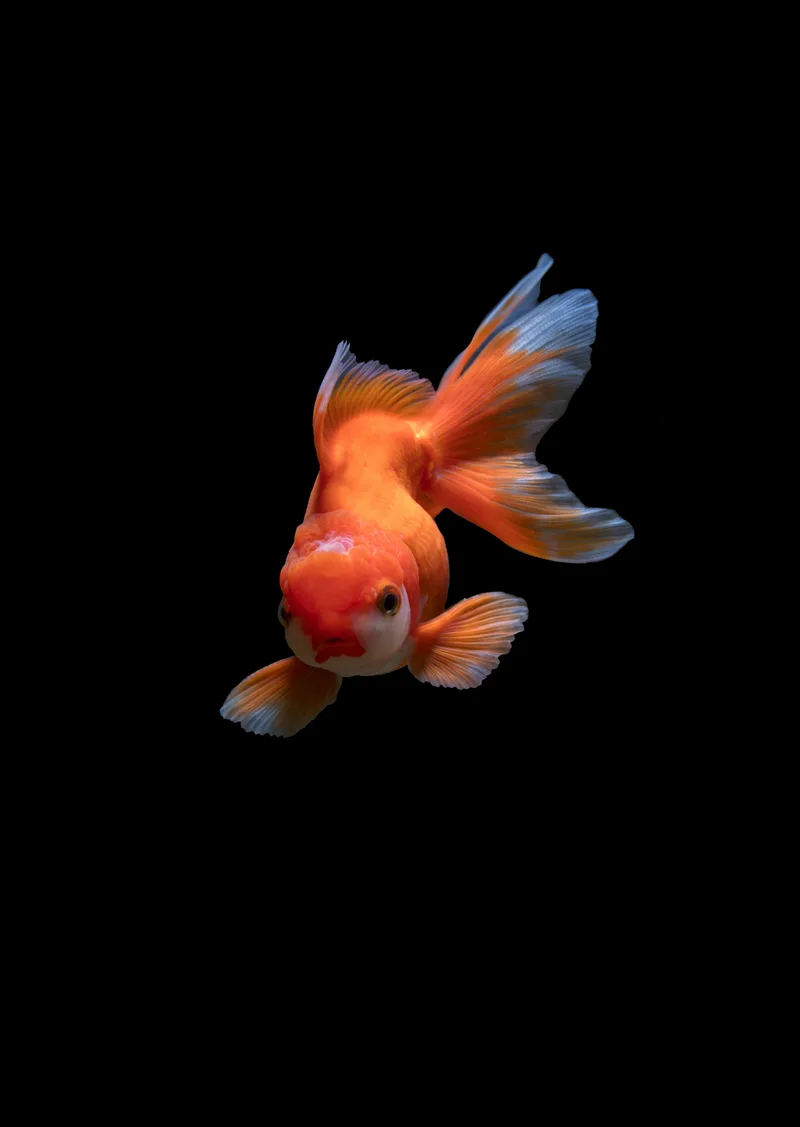
Yes, goldfish can live with live plants. The catch is that a well-fed goldfish will still uproot your plants, because for a goldfish eating means nose-down in the substrate sifting for food whether it's hungry or not. That single fact, plus the goldfish's coldwater range of 65 to 72°F, kills most of the popular aquarium plants before the fish even bites. The plants that survive are a much shorter and stranger list.
Which Plants Actually Survive in a Goldfish Tank?
Five species show up on almost every working goldfish tank: Anubias (Anubias barteri), Java fern (Microsorum pteropus), Bolbitis (Bolbitis heudelotii), Crinum calamistratum, and Marimo moss balls (Aegagropila linnaei, which is actually an algae). Add hornwort (Ceratophyllum demersum) and elodea (often sold as anacharis or pondweed) as fast-growing decoys, and you have your working list.
What they share is what makes them survive, and it falls into three groups.
The first group is tough, slow-growing rhizome plants. Anubias, Java fern, and Bolbitis all grow from a thick horizontal stem (the rhizome) that attaches to driftwood or rock instead of being planted in substrate. Their leaves are leathery and unpalatable, and because the rhizome sits on hardscape, the goldfish can't uproot them no matter how much they dig.
The second group is plants that are simply too tough or too oddly-shaped to be worth biting. Crinum calamistratum grows long, thin, ribbon-like leaves from a bulb, and goldfish ignore the leaves once they realize there's no soft tissue to eat. Marimo moss balls are dense enough that goldfish bat them around like toys without doing real damage.
The third group is the decoys: hornwort and elodea grow fast enough to replace what gets eaten. You're not protecting these plants, you're using them as a tax that keeps the goldfish off everything else.
There's also a coldwater filter most plant lists ignore. Goldfish do best between 65 and 72°F (18 to 22°C), and a long shortlist of "easy" planted-tank species (most stem plants, most carpeting plants, anything that wants a warm CO2-injected setup) won't grow at those temperatures even if your fish never touch them. The plants above all tolerate cool water, which is half the reason they made the cut.
| Plant | Why it survives | Watch out for |
|---|---|---|
| Anubias | Thick rhizome leaves, attaches to hardscape | Algae buildup on slow-growing leaves |
| Java fern | Tough leathery fronds, attaches to hardscape | Rhizome rot if buried in substrate |
| Bolbitis | Tough fronds, attaches to hardscape | Very slow grower, hates being moved |
| Crinum calamistratum | Long thin leaves from a bulb, goldfish ignore them | Bulb needs a ring of rocks around it |
| Marimo moss ball | Algae, not a true plant; dense enough to ignore | Gets kicked around, may need rinsing |
| Hornwort | Fast-growing decoy; can replace what gets eaten | Sheds needles, expect debris |
| Elodea / anacharis | Fast-growing decoy, very cheap | Can be invasive if it escapes; check local rules |
Most planted goldfish tanks end up running on some mix of these seven species, and the best aquarium plants for a goldfish tank tend to be the ones that combine coldwater tolerance with leaves a goldfish can't shred.
Why Are Goldfish So Hard on Plants in the First Place?
Goldfish are omnivorous cyprinids that evolved to feed by sifting through soft pond mud for plant matter, insect larvae, and detritus. That foraging behavior is what they do. It is not a quirk, not a sign of hunger, not something a well-fed fish grows out of. Put a goldfish in a glass tank with gravel and it will still dig at the substrate around any planted stem, because in the wild that's how it finds food.
Three things stack together, and any one of them on its own would be manageable.
There's the digging, which is the worst part. A goldfish nose-down in the substrate uproots stems just by sifting. The plant doesn't have to be eaten. It just floats off into the filter intake.
Then there's the omnivory. Goldfish browse soft greens the same way a tortoise does, and they're good at telling soft from tough. An Amazon sword's tender new leaf reads as food. An Anubias leaf reads as wood.
And there's size. A 6-inch fancy or a 10-inch common is a large fish in a planted tank, and even ignoring intent, it physically displaces plants when it swims through them, knocks bunches over when it turns at the substrate, and breaks stems with its tail.
Layer the coldwater requirement on top of all that and the picture clarifies. The warm-water plants that grow fast enough to outrun a heavy grazer (most stem plants, most carpeting plants) need temperatures and lighting that don't match a goldfish tank. The plants that do tolerate goldfish temperatures grow slowly, which means the only ones that survive are the ones the goldfish can't or won't damage in the first place.
This is what makes the goldfish-and-plants problem specific rather than general. A planted tetra tank works because the fish are too small to uproot anything and the plants grow fast enough to recover from a nibble. A goldfish tank fails on both counts at once.
Did you know? Goldfish were domesticated in Chinese ornamental ponds for over a thousand years before they ever entered a glass tank, and those ponds were planted heavily with water lily and lotus, hardy tough-leaved species the fish couldn't physically destroy. The "goldfish versus planted tank" problem is what happens when you scale that pond down to 30 gallons and swap the lotus for a soft-leaved Amazon sword. The fish hasn't changed. The plants around it have.
How Do You Set the Tank Up so the Plants Stay Planted?
Three levers do most of the work: substrate, attachment, and decoys.
Substrate first. Use fine pea gravel or smooth gravel in the 2 to 3 mm range. Skip aquasoil and any nutrient-rich planted-tank substrate, because a goldfish will excavate it in a week and your water will be cloudy for a month. Plain gravel is the right call here. It looks less impressive in a photo and works much better in practice.
Attachment is where most goldfish keepers stop fighting the fish and start working with it. Anubias, Java fern, and Bolbitis don't go into the substrate at all. Tie the rhizome to driftwood or rock with cotton thread, or glue it on with cyanoacrylate gel (the same superglue used in reef-keeping; it's safe once cured). The rhizome eventually grips the hardscape on its own and the thread can be cut away. For bulb plants like Crinum, plant the bulb shallow with the top exposed and ring it with smooth pebbles so the goldfish can't dig it out from the side.
Decoys are the last piece. Keep a clump of hornwort or elodea floating or weighted at one end of the tank. Goldfish will graze it first because it's soft and easy, and a healthy clump grows fast enough to keep ahead of the grazing. The decoy is doing real work; if you skip it, the same grazing pressure goes onto your showpiece plants.
Feeding matters too, and this part is often skipped. A goldfish on a varied daily diet, sinking gel food, blanched vegetables, the occasional bloodworm, grazes measurably less than a hungry one. The protein side of the diet keeps them from treating every plant as a salad bar. It doesn't make them stop foraging, because the foraging isn't about hunger, but it lowers the appetite that drives the worst of the browsing.
- Tie rhizome plants (Anubias, Java fern, Bolbitis) to driftwood or rock with cotton thread or gel super glue, never into substrate
- Ring bulb plants (Crinum) with smooth pebbles so the bulb can't be dug out from the side
- Weight stem plants in bunches with planting weights rather than relying on substrate to hold them
- Keep a floating or weighted clump of hornwort or elodea as a sacrificial graze plant
- Feed a varied daily diet so the goldfish isn't browsing out of hunger
A pothos (Epipremnum aureum) with its roots in the tank and leaves outside is a wildcard worth knowing about: the roots strip nitrates from the water, the goldfish can't reach the leaves, and the plant survives because it isn't really submerged. It looks unconventional. It also works.
What If My Goldfish Already Destroyed Everything I Planted?
Look at how the plants failed and the cause is usually obvious.
If plants were uprooted but not eaten, the substrate or attachment was wrong. Switch rhizome plants onto hardscape, weight stem plants in bunches, and ring bulbs with pebbles. The plants themselves were probably fine; they just had nothing to hold them.
If leaves were stripped or shredded, you picked the wrong species. The goldfish identified them as food, and that won't change. Rotate to Anubias, Java fern, or Bolbitis, all of which the fish learns to ignore once it realizes the leaves are too tough.
If plants melted regardless of attachment, the problem wasn't the goldfish at all. The plant needed warmer water, brighter light, or CO2 that a goldfish tank doesn't provide. This is the failure mode that catches people, because it looks like the goldfish did it, but the plant was already dying when the goldfish started picking at it.
If your tank holds a mix of fancies and commons, the commons are doing most of the damage. A common goldfish or comet is larger, faster, and far more destructive than a fancy of the same age. A tank that held plants with one ranchu may not hold them when you add two comets, and that has nothing to do with the plants.
The cheapest way to find out which kind of tank you have is to try one Anubias on a piece of driftwood for two weeks. If it survives and the fish leave it alone, your tank can probably hold a planted scape. If the fish keeps biting at it or knocks it loose, your tank wants hardscape with a sacrificial clump of hornwort and not much else. Either answer is a real one, and it costs about ten dollars to find out.