What are the best aquarium plants for a goldfish tank?
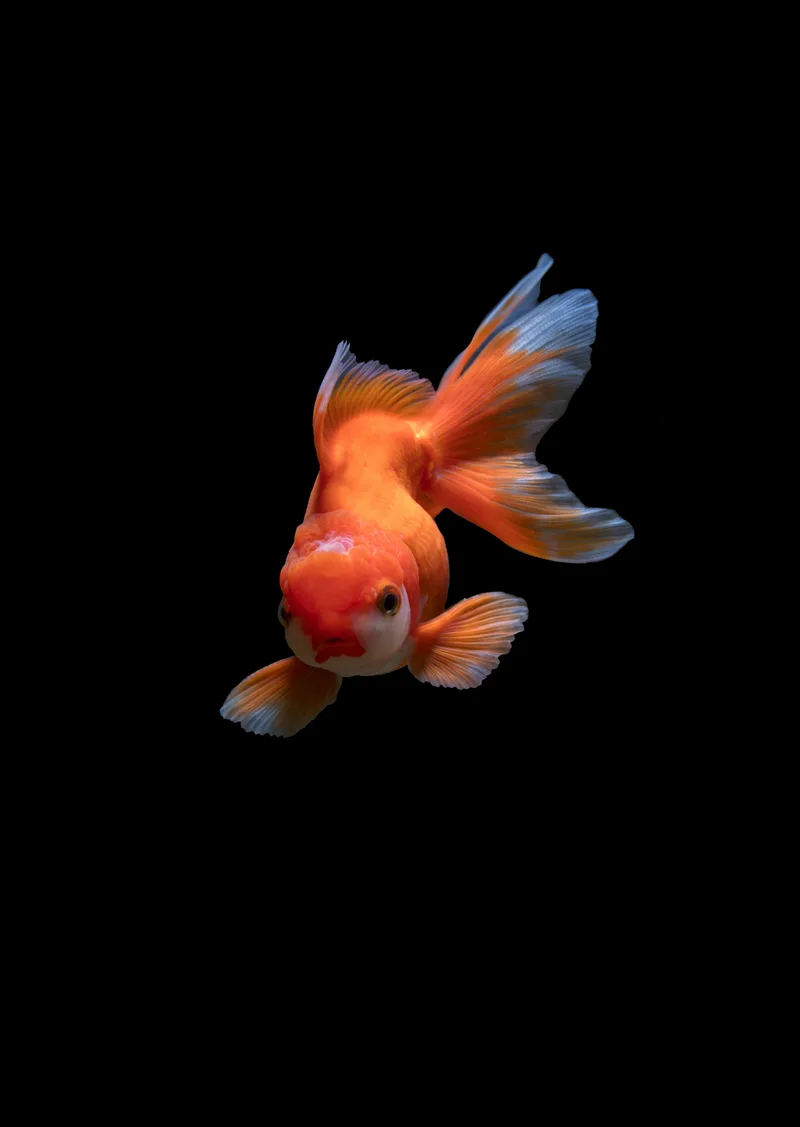
Three plants survive almost any goldfish tank: Java fern, Anubias, and Marimo moss balls. They have nothing in common as species (a fern, a flowering plant, and a ball of algae) but they share the three traits that defeat goldfish: leaves too tough to nibble, growth attached to wood or rock instead of rooted in gravel, and a real preference for the cool water goldfish actually like. The harder question is what to add beyond those three, because once you want background height or fast nitrate uptake the right answer starts depending on whether you keep a fancy or a common.
Java fern
Java fern (Microsorum pteropus) is the most reliable plant you can put in a goldfish tank. The leaves are leathery and slightly bitter, so goldfish try them once and move on. Just as important, it grows from a rhizome (a thick horizontal stem) that attaches to driftwood or rock. There is nothing for digging fish to uproot because the plant isn't anchored in the gravel in the first place.
The cardinal rule: never bury the rhizome in substrate. If you push it down into the gravel "to keep it in place," it rots within weeks and the whole plant collapses. Tie or glue the rhizome to a piece of wood or a flat rock and let the roots find their own grip. Within a month or two it will be solid enough that a comet can swim into it without budging it.
Java fern is comfortable in the 65 to 75°F (18 to 24°C) range that suits goldfish, and it does fine in low to moderate light. In a fancy goldfish tank, a standard Java fern can look oversized. The small varieties, particularly Needle Leaf and Trident, keep the same toughness in a more proportional package.
Anubias
Anubias is the second pillar of any goldfish tank, and in some ways it is even tougher than Java fern. The leaves are thick, almost waxy, and so dense that goldfish struggle to get a meaningful bite. Like Java fern, Anubias grows from a rhizome that wants to be attached to hardscape, not buried. The same rotting rule applies if you push the rhizome into gravel.
Stick to the larger species. Anubias barteri and Anubias coffeefolia have leaves big enough that a determined goldfish can't tear them, and rhizomes thick enough to resist being knocked off the wood. The very small varieties (particularly Anubias nana petite) are tempting because they look neat, but a curious comet will dislodge the whole plant in an afternoon.
Anubias accepts low light and tolerates cool water down to around 65°F (18°C). It grows slowly, which is a feature in a goldfish tank: slow growth means you are not constantly replanting it, and the leaves stay clean enough that you can see them.
Goldfish almost never eat Anubias, because the leaves are dense enough that the fish can't get a useful bite and bitter enough that they stop trying after the first attempt.
Marimo moss balls
Marimo are the third no-fail pick, and the one most beginners already recognize from pet store impulse displays. Despite the name, they are not moss. A Marimo is a colony of green algae (Aegagropila linnaei) that grows in a slow, dense sphere, and that structure is the reason goldfish leave them alone. There are no roots to dig at and no leaves to grip, just a tight ball of filaments goldfish can't get a mouthful of.
The other thing Marimo have going for them is temperature. They come from cold lakes in the northern hemisphere and prefer water below 75°F (24°C). In a goldfish tank that is not a compromise, it is a match. Warm tropical tanks stress them; goldfish tanks suit them.
Goldfish will roll Marimo around the bottom of the tank and occasionally push them up against the filter intake. This is harmless. Pick them up once a week, give them a gentle squeeze to release trapped debris, and put them back wherever you like. Over months and years they slowly grow into bigger, denser balls.
Did you know? Wild Marimo are slowly disappearing. Lake Akan in Japan, where they grow into volleyball-sized spheres, is one of only a handful of places left where they form naturally. The ones you buy in shops are almost always hand-rolled cuttings, kept spherical by the same gentle current that shapes them in the wild.
Vallisneria
When you want the tall, swaying-grass look at the back of the tank, Vallisneria is the answer. The ribbon-like leaves can reach 18 to 24 inches (45 to 60 cm) in a deep tank, and once they have been in the substrate for a few weeks, they are tough enough that goldfish nibbling makes no real dent.
The catch is in those first few weeks, and in what kind of goldfish you keep. Vallisneria is rooted in the substrate, so a digging fish can pull a freshly planted crown out of the gravel before the roots have had time to spread. Fancies tend to nose at the substrate gently and will usually leave a new Vallisneria alone long enough for it to establish. Commons and comets dig harder, and a freshly planted Vallisneria will be uprooted within a day unless you do something about it.
The fix is to protect the base. Sink a small clay pot into the substrate and plant the crown inside it, or weigh down the area around the roots with a few larger river rocks. After a month, the runner system has spread enough that the plant can hold itself in. Vallisneria wants moderate to bright light, so it is the one plant on this list that may need a real planted-tank bulb rather than the dim lid light a goldfish tank often comes with.
Hornwort
Hornwort (Ceratophyllum demersum) is the plant goldfish are allowed to eat, and it earns its place for that reason. It grows fast, properly fast, several inches a week under decent light, and it pulls nitrate out of the water faster than almost any other freshwater plant. In a goldfish tank, where the bioload is heavy and ammonia and nitrate climb quickly between water changes, that nitrate-sponge effect matters.
You do not have to plant it. Hornwort has no real roots; the stems can float at the surface, where they form a thick green canopy, or you can weight a bunch with a plant anchor at the back of the tank and let it grow upward like a column. Either works.
Goldfish will graze on the soft, feathery tips, and they should. A grazing goldfish is a goldfish that is not pulling at your Java fern. As long as the hornwort is growing faster than the fish can eat it, which it almost always is, the plant keeps up and the fish stay occupied. Think of it as a working plant rather than a decorative one. Its job is to absorb excess nutrients and give the fish something safe to nibble on.
Plants to skip (and why)
A handful of plants get sold or recommended as "goldfish plants" that don't earn the label. Knowing which to walk past matters as much as knowing which to buy.
- Amazon sword. Sold as a centerpiece for every kind of tank, but it wants tropical-warm water (72 to 82°F / 22 to 28°C) and a deep substrate it can root into. Goldfish are cooler than that, dig the roots up before they establish, and the leaves are soft enough to shred.
- Most soft-stem plants. Cabomba, Rotala, Ludwigia, and similar stem plants have tender leaves goldfish strip in days. They look beautiful in planted display tanks and disappear in a goldfish tank.
- Duckweed. Sometimes pitched as fish food, but it covers the surface in a solid mat within weeks and blocks oxygen exchange just when the heavy goldfish bioload needs the surface most. The food argument doesn't justify the cost.
- Big-box "aquarium plants" that aren't. Dracaena, Mondo grass, lucky bamboo, and peace lily are all terrestrial plants sometimes sold in tubes for aquariums. They rot underwater within a month or two and foul the water on their way out. If a plant has a stiff, glossy leaf and a stem that looks like it should be in a pot, it probably belongs in a pot.
The underlying rule is short. If a plant has soft leaves, wants tropical heat, or relies on being rooted in substrate to stay put, goldfish will defeat it. The five recommended plants above all fail at least two of those traits, and that's what makes them work.
How to pick the right ones for your tank
Three questions narrow this down quickly.
Is this a fancy goldfish or a common / comet? Fancies are slower, less destructive, and tolerate planted setups more gracefully. You can plant Vallisneria in the substrate without a fight, and Anubias nana petite can sometimes hold up. Commons and comets dig harder and swim faster. Every plant needs to be attached to wood, rock, or a weighted pot, and the smaller Anubias varieties come off the wood.
Do you want height or just something visible? Vallisneria is the answer for tall background greenery. Java fern and Anubias attached to driftwood give you mid-tank green at any height you like, depending on how big the wood is. Marimo sit on the substrate and stay low. Hornwort can be either: a floating canopy or a planted column at the back.
How much light do you have? Anubias, Java fern, and Marimo are happy with the low to moderate light most goldfish tanks come with. Vallisneria wants more, and may need a brighter bulb. Hornwort handles either but grows faster in good light.
| Plant | Anchored how | Light needed | Best for |
|---|---|---|---|
| Java fern | Tied to wood or rock | Low to moderate | Fancy and common |
| Anubias (barteri, coffeefolia) | Tied to wood or rock | Low to moderate | Fancy and common |
| Marimo moss balls | Free on substrate | Low to moderate | Fancy and common |
| Vallisneria | Rooted in substrate, weighted at base | Moderate to bright | Fancy (commons need extra protection at the base) |
| Hornwort | Floating or weighted at base | Moderate | Fancy and common |
The framing that gets people stuck is "goldfish-proof plants," because none of these plants are. They are just plants that work around how goldfish actually behave. Once you have the three traits in your head (hard leaves, anchored to hardscape, comfortable in cool water), you can walk into a fish store and evaluate anything on the shelf, not just the five names on this list. That is what makes the planted goldfish tank possible: not a magic list, but a way of seeing which plants meet the fish on its terms.