Do goldfish eat anubias?
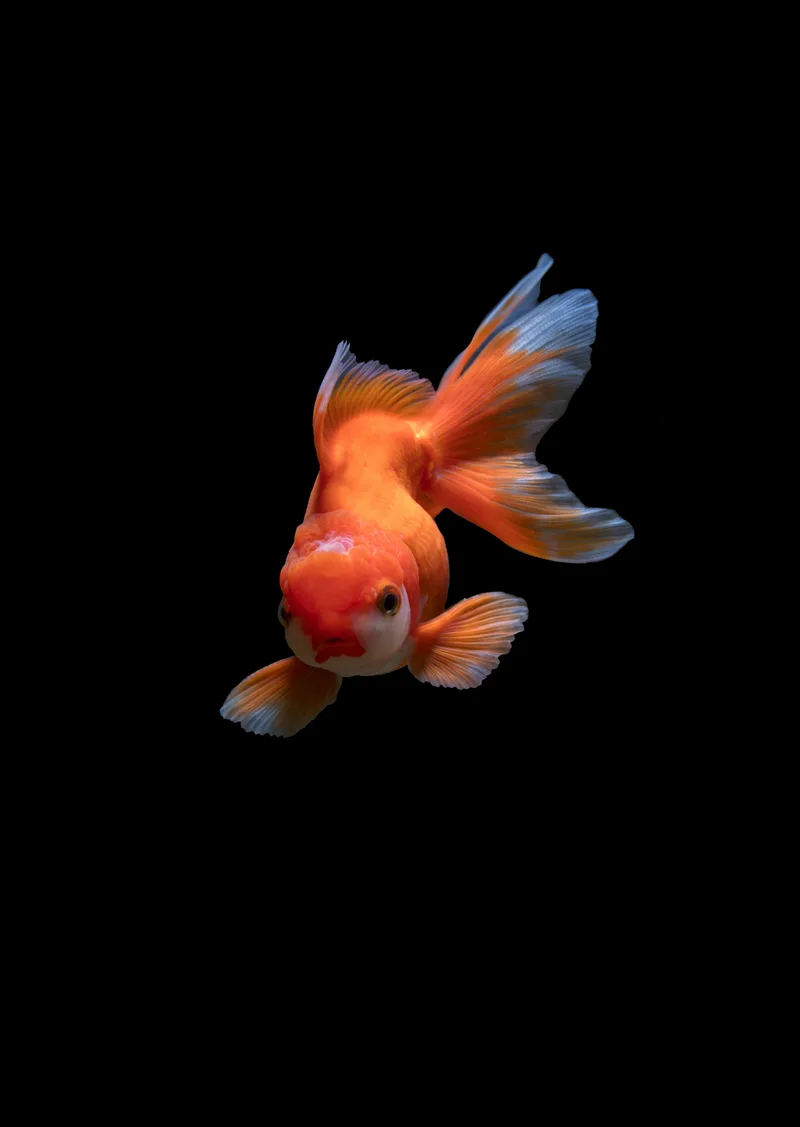
No, goldfish almost always leave anubias alone. It's one of the very small handful of live plants that holds up in a goldfish tank, while most of the others get shredded inside a week. What trips people up is that there are two different scenes that look identical from the couch: a goldfish nipping at a leaf, and a goldfish grazing the soft algae growing on a leaf. The first is rare and the second is normal, and most of the worry about whether anubias survives or doesn't comes down to which one you're seeing.
How Do I Actually Put Anubias in a Goldfish Tank?
Attach the rhizome (the thick, horizontal stem the leaves grow off) to a piece of driftwood or a rock. Tie it on with cotton thread, fishing line, or a dab of cyanoacrylate super glue gel, which is aquarium-safe and sets underwater. Never bury the rhizome in your gravel or sand. Buried rhizomes rot, and a rotting anubias drops every leaf inside a few weeks.
Goldfish dig, so an unanchored plant ends up floating by the next morning even if they have no interest in eating it. The rocks and wood you tie the plant to need enough weight to ride out a goldfish nosing through the substrate.
For varieties, pick the larger, tougher cultivars rather than the petite ones. Anubias barteri, Anubias coffeefolia, and Anubias congensis all have thick leaves and a chunky rhizome that takes more abuse than nana or petite forms. The smaller varieties work in a calm shrimp tank. They don't really earn their place in a goldfish tank.
Keep the lighting low to moderate. Anubias is a slow grower, and bright light just feeds the algae that ends up coating its leaves. A single low-output LED across the tank is plenty.
- Tie the rhizome to driftwood or a rock; never bury it in substrate
- Keep the whole rhizome above the substrate so it can breathe
- Choose Anubias barteri, coffeefolia, or congensis over petite or nana
- Run low to moderate lighting (anubias does not need bright light)
- Expect very slow growth: one or two new leaves a month is normal
Why Do Goldfish Leave Anubias Alone When They Eat Everything Else?
The leaves are the wrong texture. Anubias leaves are unusually thick, waxy, and rubbery compared to the soft greens that fill out most planted tanks. Goldfish are opportunistic omnivores, and the plants they really go after, like elodea, cabomba, hornwort, and water sprite, shred easily when nibbled. A leaf that doesn't tear under a goldfish's grinding throat teeth (their main chewing equipment) gives no reward, so they try once and move on. The plant is functionally inedible to them, the same way a houseplant with leathery leaves is functionally inedible to a curious cat.
There's a second half to this that explains the planting rule. Anubias is an epiphyte, meaning in the wild it grows clinging to wood and rock above the substrate rather than rooting in mud. Its native habitat is shaded African riverbanks where the rhizome anchors to whatever solid surface the current allows. That rhizome breathes through the water, not through soil, which is why burying it kills the plant. The same biology that makes the leaves goldfish-resistant is the biology that dictates how to attach it.
Did you know? The genus is named after Anubis, the Egyptian god associated with the afterlife. The reference is to where the plant grows, in the deep shade along African riverbanks, where most plants can't get enough light to survive.
What If My Goldfish Is Actually Nibbling the Leaves?
First, watch closely and check what's really going on. A goldfish picking at the surface of a leaf and a goldfish tearing the leaf itself look almost identical from the couch, but they are two different behaviors. The plant tells you which one it is over the following week. If the leaves are still intact but look a little cleaner, your fish is grazing the soft green algae and biofilm coating the surface, and that's completely normal. It doesn't harm the plant at all. Anubias leaves are a popular algae substrate precisely because they grow slowly enough for a thin film to build up before the leaf renews itself.
If you see actual holes, ragged edges, or whole leaves vanishing, then the fish is going after the plant itself. That's rare, but it does happen, and the cause is almost always one of three things.
The first is hunger. A goldfish that isn't getting enough food, or enough variety, will test anything in the tank. Bulk up the vegetable side of the diet with blanched zucchini, deshelled peas (a classic goldfish staple, also useful for constipation), and small amounts of spinach or romaine. A well-fed goldfish has very little reason to chew on something rubbery.
The second is boredom, especially in fancy varieties like ranchu, oranda, and ryukin, whose swimming range is limited by their body shape. Bored goldfish pick at decor, ornaments, and any plant in reach. More hardscape, more swimming room, and tank mates of their own kind give them something else to do.
The third is freshness. A newly added anubias with soft new growth is more tempting than a settled one. The fresh leaves haven't fully hardened off, and the plant's defensive thickness builds in with maturity. Give a new anubias a few weeks behind a small barrier or in a corner before judging whether the goldfish will leave it alone for good.
What Other Plants Survive a Goldfish Tank?
A handful of plants share anubias's mix of toughness and goldfish-resistance, and they're worth knowing about if you want a more planted look.
Java fern (Microsorum pteropus) is the closest cousin in strategy. It's another epiphyte with thick, leathery leaves that goldfish don't bother with. Tie it to wood or rock the same way you attach anubias, and treat it the same in low light.
Cryptocoryne species are planted in substrate, but once their roots establish (which takes a few weeks of melting and then regrowing), they resist uprooting and grow back from the root if a leaf gets damaged.
Marimo moss balls (Aegagropila linnaei) are technically a ball of filamentous algae, not a plant, and goldfish find them no more appetizing than the algae growing on the glass.
Floating plants like water lettuce (Pistia stratiotes) and amazon frogbit (Limnobium laevigatum) sit on the surface, out of reach for goldfish that mostly swim and forage lower in the column. Their roots dangle down and provide cover without giving the goldfish anything to chew on.
The best aquarium plants for a goldfish tank all share that same combination of tough leaves and either an epiphyte habit or out-of-reach placement. The pattern is what to look for whenever you're considering a new species.
Anubias isn't surviving in your goldfish tank despite the fish. It's surviving because of biology that predates aquariums by a very long time. The plant evolved to cling above African riverbeds in deep shade, with leaves built to put off the herbivores that share those banks. Dropping it into a domesticated coldwater cyprinid's tank is a quiet little match-up of two species that were never meant to meet. The plant's old defenses, sharpened on animals nothing like a goldfish, are exactly the reason it works in front of yours.