What mistakes do beginner goldfish owners make?
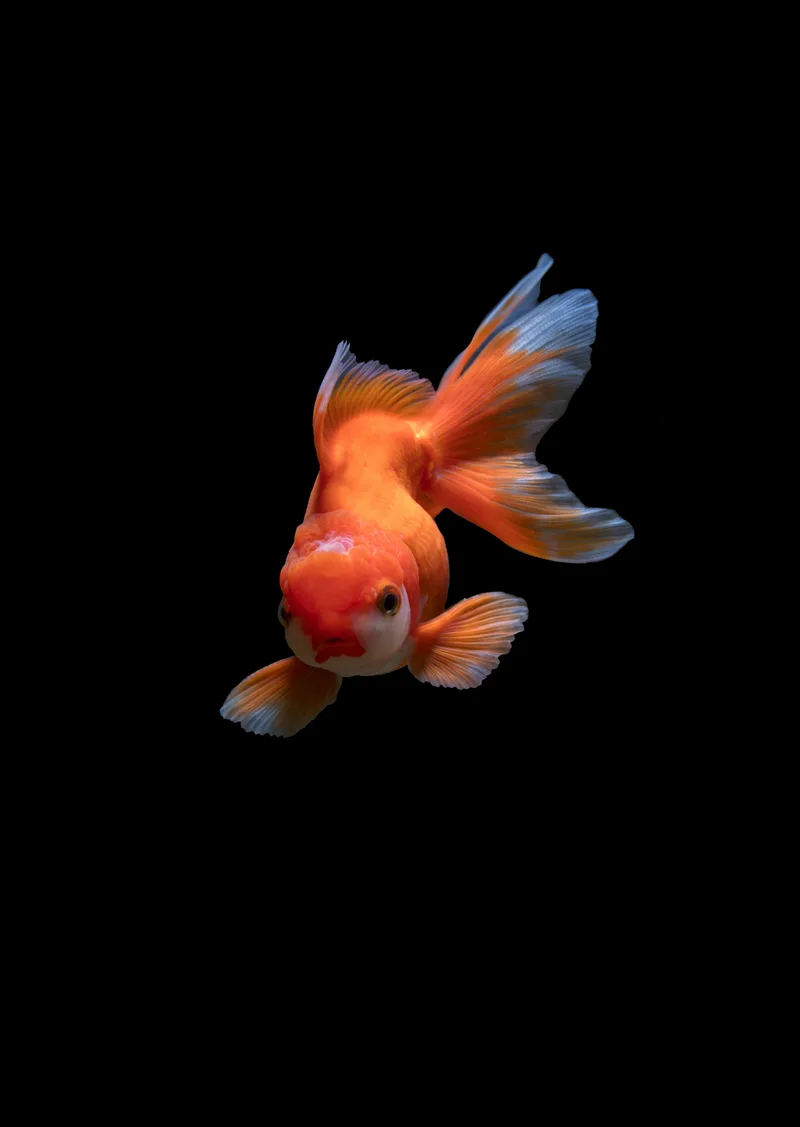
Picture the cartoon goldfish: orange, in a round glass bowl on a desk, by itself. That image is the mistake. A goldfish (Carassius auratus) is a coldwater pond fish that grows to the length of a forearm, lives 10 to 15 years, and produces more waste per inch than almost any other freshwater fish you can buy. Almost every beginner mistake below is a downstream consequence of that one misclassification, the bowl-shaped one, and the fix for nearly everything that follows is letting the fish be what it actually is rather than what it looks like in the picture.
Keeping a goldfish in a bowl
The bowl is the icon for a reason. A 1-gallon bowl holds too little water for the bioload a goldfish produces, has no room for a real filter, and its narrow surface area starves the water of gas exchange. Ammonia from the fish's waste climbs to lethal levels in days, not weeks, and the fish gasps at the surface while the water looks clear.
Adult goldfish are not small fish. Fancy varieties like the Oranda and Fantail reach 15 to 20 cm (6 to 8 in). Commons, comets, and shubunkins reach 25 to 35 cm (10 to 14 in), which is the length of a forearm. A bowl that comfortably houses a guppy is a coffin for a fish that grows to those sizes, and it stays a coffin even if the fish never quite grows into its full adult length, because the water chemistry collapses long before the fish runs out of room to turn around.
A bowl is the single fastest way to lose a goldfish in its first month, and it's why no goldfish belongs in one regardless of size.
Buying a tank that's far too small
Even owners who skip the bowl usually undershoot. A 5- or 10-gallon "starter" tank from the pet store is still the most common second mistake, and the staff sometimes encourage it because the tank fits the fish on day one. It does not fit the fish on year one.
Goldfish produce more waste per inch of body than almost any other freshwater fish. That's why the old "one inch of fish per gallon" rule breaks for them. The tank isn't really a swimming volume, it's a filtration volume, and the bigger you make it the more forgiving it becomes when feeding goes long or a water change slips a week.
The actual numbers, by body shape:
| Goldfish type | Minimum tank (1 fish) | Add per extra fish |
|---|---|---|
| Fancy (oranda, ryukin, fantail, black moor, ranchu) | 20 gallons (75 L) | +10 gallons (38 L) |
| Common, comet, shubunkin | 75 gallons (285 L) | +50 gallons (190 L) |
The split is large enough that it matters which goldfish you have before you buy the tank. A common in a 20-gallon will outgrow it inside a year and start growing into trouble: stunted body, curved spine, shortened life. The same numbers hold across every common variety you can buy in a fish store, with the fancy-versus-common split doing most of the work.
Adding the fish before the tank is cycled
The classic version of this mistake is buying the tank and the fish in the same trip and putting one inside the other that same evening. The tank is clear, the fish looks fine, and the trouble doesn't start for three or four days.
Cycling is the process of growing two specific bacteria in the filter. The first kind eats the ammonia the fish produces and turns it into nitrite. The second kind eats the nitrite and turns it into nitrate, which is far less toxic. Until both colonies are established (this takes four to six weeks in a fishless cycle), the fish is swimming in its own waste with nothing converting it. Goldfish are punished harder than most fish by this because their bioload is so high: ammonia spikes within days and the symptoms show fast. Gasping at the surface, fins clamped against the body, gills tinged red, the fish refusing food and resting on the substrate.
If the fish is already in the tank, the practical fix is a bottled bacteria starter (Seachem Stability, Tetra SafeStart, or similar), a liquid ammonia and nitrite test, and 25 percent water changes every day or two until both readings sit at zero. If you haven't bought the fish yet, the kinder version is to dose pure ammonia into the empty tank, wait until the bacteria appear and convert it cleanly, and then add the goldfish.
Treating goldfish as tropical fish
This one is invisible until you look at the back of the tank. A heater set to 78°F sits in there as a default, sometimes because the starter kit came with one, sometimes because the assumption that "tank fish need a heater" is older than the hobby's understanding of coldwater species.
Goldfish are coldwater fish. Their happy range is 18 to 22°C (65 to 72°F), which is room temperature in most houses. Warmer water raises their metabolism, which raises their waste output, which fouls the tank faster. It also weakens their immune system and shortens their lifespan; a goldfish kept at 78°F for years rarely reaches the 10 to 15 years it should. There is nothing tropical about this animal.
Did you know? The goldfish was domesticated in China over a thousand years ago, selectively bred from the Prussian carp, a hardy coldwater fish that lives in ponds across northern Europe and Asia. Some of those ponds freeze over the top in winter and the carp keep living underneath. The pet you have on your shelf is closer to a carp than to a tetra.
The corollary catches people once the heater comes out. The "tropical community" tank mates the pet store puts in the same display, neon tetras, guppies, mollies, want water in the high 70s. They cannot share a tank with a goldfish whose ideal temperature is ten degrees colder. The right answer is almost always a goldfish-only tank, and once you stop trying to bridge that gap, most of the tank-mate questions answer themselves.
Overfeeding
Goldfish beg. They come to the front of the glass when anyone walks past, they flare their fins, they sometimes nose at the surface. The beginner reads this as hunger and feeds. The fish eats. Twenty minutes later it begs again.
Did you know? Goldfish don't actually have a true stomach. Food passes straight from the throat through a simple intestinal tube. That's why the begging never quite stops: a wild Prussian carp grazed low-calorie pond plants from dawn to dusk, and a 1,000-year-old domestic descendant still runs on that same constant-foraging program even when each meal is dense pellet food.
The practical rule is short. Feed once or twice a day, only as much as the fish finishes in about a minute, and give them one fasting day a week so the gut clears. For fancy varieties (orandas, ryukins, ranchus), sinking gel food or pre-soaked pellets are kinder to the swim bladder than dry floating flakes, which take on air on the way down and bloat the fish. A fancy that suddenly tips on its side or floats at the surface usually isn't dying, it's been overfed dry flakes, and a fasting day plus a switch to soaked food fixes it within the week.
Mixing incompatible goldfish (or incompatible tank mates)
Two related mistakes come packaged together once a beginner moves past the single-fish stage. The first is mixing fancy goldfish with commons or comets in the same tank. Commons and comets are strong, fast, athletic swimmers; fancies are bred for body shape and have nothing like that speed. The commons get to the food first, eat most of it, and the fancies live in low-grade stress that shows up as clamped fins, faded color, and a slow decline.
The second is trying to build a tropical community around a goldfish, putting them with neon tetras or guppies or a betta. The temperatures don't match, the goldfish's waste output overwhelms the small-fish filtration, and the goldfish is large enough to mistake a neon tetra for a meal once it's grown in.
The simple rule that catches both: stay inside the body-shape group. Fancies live with other fancies; commons live with other commons. The goldfish is the community, not a member of one, and the short list of species that share goldfish water without being eaten or stressed out reflects how narrow the overlap really is.
How to start a goldfish tank right
If you haven't bought the fish yet, or you've just brought one home and want to do better than the pet store setup, the whole list above collapses into five concrete moves you can make this week.
- Pick the tank for the adult fish. 20 gallons for one fancy, 75+ gallons for one common or comet. Buy the tank before the fish.
- Cycle the tank before the fish goes in. Four to six weeks fishless, with pure ammonia and a test kit, or with a bottled bacteria starter while you do daily water changes if the fish is already home.
- Skip the heater. Set the room temperature at 18 to 22°C (65 to 72°F) and let the tank match the room. If your house runs hot, an aquarium chiller does what a heater would do in reverse.
- Feed lightly, twice a day. A minute's worth of food, one fasting day a week, sinking or soaked food for fancies.
- Stay inside the goldfish family. Fancies with fancies, commons with commons, and nothing tropical.
A goldfish kept this way looks nothing like the pet-store image of a goldfish. It's a foot-long, social, long-lived coldwater fish in a tank the size of a small bench, and it lives for 10 to 15 years and sometimes longer. The fish that survives that long is the same species as the one that dies in a week. The only thing that changed is what you knew on day one.