How fast do goldfish have babies?
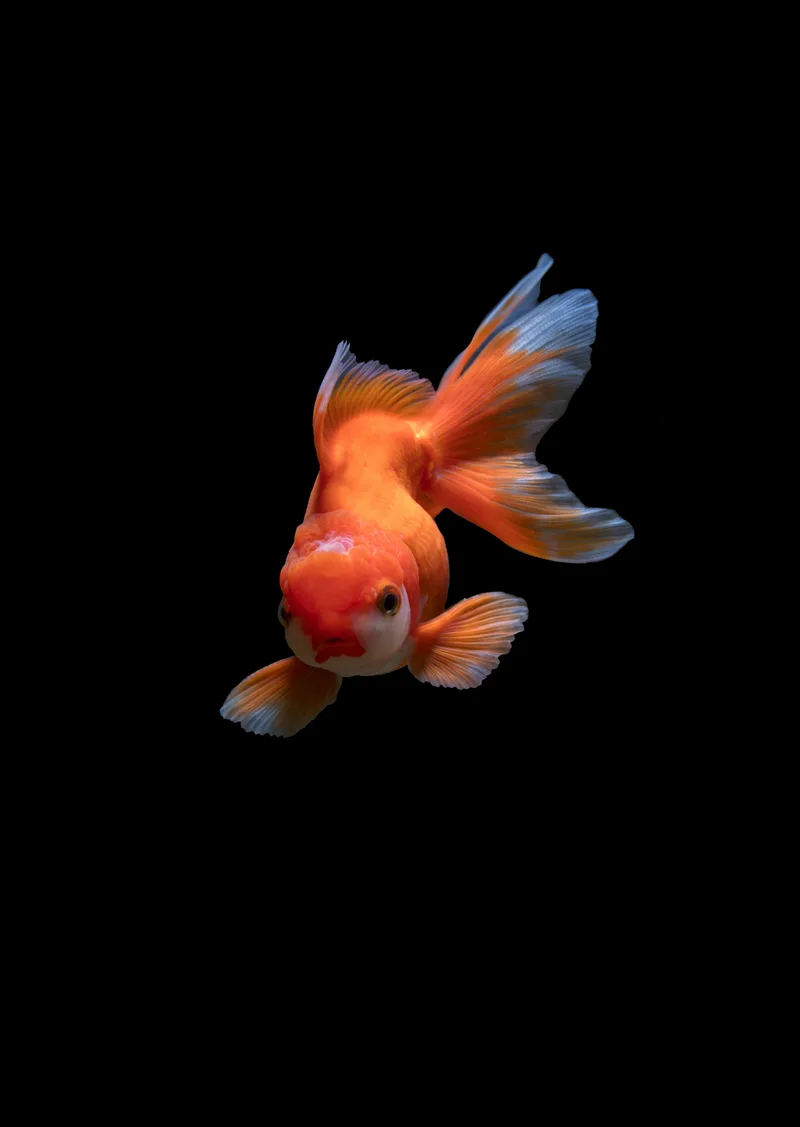
Goldfish don't have live babies at all. A female goldfish (Carassius auratus) in breeding shape lays eggs, several hundred to over a thousand of them in a single spawn, roughly every two to four weeks through the warm months, and they hatch in two to seven days. By that count, goldfish reproduce almost constantly. But that's only half the answer, because nearly all of those eggs never become fish: the parents eat them within hours. So "how fast do goldfish have babies" is really two different numbers pulling in opposite directions, and the gap between them is the whole story.
How Often Do Goldfish Actually Lay Eggs?
A healthy, mature female in breeding shape spawns about every two to four weeks during the warm season. Each spawn isn't a handful of eggs either. She scatters several hundred at a time, and a large, well-fed female can release close to a thousand in one go.
The eggs are tiny, sticky, and clear to amber. The male fertilizes them in the open water as she releases them, and they cling to plants, decor, and the glass. From there the timeline is quick. Most eggs hatch in about three days, with the full range running two to seven days depending on water temperature. Warmer water inside the goldfish's comfortable range speeds it up; cooler water slows it down.
Across a single warm season, one pair can scatter many thousands of eggs this way.
| What happens | Typical number | Notes |
|---|---|---|
| Spawning frequency | Every 2 to 4 weeks | Only during the warm season, in fish that are in breeding shape |
| Eggs per spawn | Several hundred up to ~1,000 | Bigger, well-conditioned females lay more |
| Time to hatch | 2 to 7 days | Usually around 3; warmer water hatches faster |
Why Don't All Those Eggs Turn Into Goldfish?
Here is where the two numbers split apart. A pair of goldfish can scatter a thousand eggs and leave you with zero fish a week later, and nothing has gone wrong.
Goldfish are broadcast spawners. The female releases eggs into open water, the male fertilizes them, and that is the entire extent of the parenting. Goldfish do not guard their eggs, fan them, or protect the fry. They don't recognize the eggs as their own offspring at all. To an adult goldfish, a cloud of fresh eggs is simply food, and they will spend the hours after spawning eating them off the plants and glass. Any other fish in the tank joins in. Within a day, most of a spawn is gone this way.
The eggs that escape being eaten still face a second filter. A good share of any spawn is never fertilized in the first place, and unfertilized eggs turn opaque white and grow a fuzzy coat of fungus within a day or two. That fungus can spread to healthy eggs sitting next to them. Between the eating and the fungus, a spawn of several hundred often produces only a few survivors in a typical home tank, and frequently none.
Did you know? Goldfish were domesticated from wild carp in China more than a thousand years ago, and they inherited the carp's reproductive strategy: flood the water with eggs precisely because so few will ever survive. It's a numbers game played by quantity, not care. Laying a thousand eggs and abandoning them is the whole plan, not a failure of it.
What Triggers Goldfish to Breed in the First Place?
Goldfish don't spawn year-round on a whim. A few specific conditions have to line up, which is why one tank produces eggs constantly and another never does.
The biggest trigger is rising temperature. Goldfish spawn as the water warms into roughly the high 60s to low 70s°F (about 20 to 23°C). A tank that follows the seasons, cooling through winter and warming in spring, sends a strong signal that breeding season has arrived. A tank held at one steady temperature all year sends no such signal, which is why a stable indoor setup may produce the occasional spawn or none at all, even with a healthy pair in it. The urge also fades once the water climbs past about 75°F (24°C), so very warm water can switch spawning back off.
Lengthening daylight does similar work. The longer days of spring, alongside the warming water, are part of what tells goldfish it's time.
The fish themselves also have to be ready. Goldfish reach breeding age at around one to two years old and are usually at their best around three. And they need to be well-fed and in good condition heading into the season, with the female carrying eggs and the male in shape to chase. A thin, stressed, or very young goldfish won't spawn no matter what the water is doing. To set these conditions up on purpose, you cool the tank through a simulated winter and then warm it back up to trigger spawning while feeding heavily to bring the pair into condition.
Do I Need to Do Anything If My Goldfish Lay Eggs?
If you've just found a layer of tiny clear or amber dots on your plants and glass, the first thing to know is that this is completely normal. Eggs are a sign of healthy, mature, comfortable goldfish, not a sign that anything is wrong. You do not have an emergency on your hands, and you do not have to do anything at all.
What you do next depends only on whether you want any of the eggs to survive.
- If you don't want fry, leave it alone. This is the default, and it's perfectly fine. The adults will eat most of the eggs within a day, and the unfertilized ones will fade and break down. The tank takes care of it on its own.
- If you want some to survive, separate the eggs or the adults. Move the egg-covered plants or decor into a clean container of the same tank water, or move the adults out, so the parents can't eat them. This is the only reliable way to get fry, because the parents will not raise them for you.
- Keep the water clean during the hatch. If you're hatching eggs in a separate container, unfertilized eggs fungus quickly and can foul the water, so gentle aeration and removing any white, fuzzy eggs helps the healthy ones make it.
- Don't expect the parents to help. There is no parental care to wait for. Once the eggs are laid, the adults are done, and leaving them with the eggs guarantees they'll be eaten.
This is where the two answers to "how fast do goldfish have babies" finally meet. Biologically, goldfish reproduce constantly and explosively through the warm season, scattering thousands of eggs a pair. Yet in an ordinary home tank, you'll almost never end up with surviving fish unless you step in on purpose. A tank full of eggs isn't a population boom you need to brace for. It's just proof that your goldfish are doing well.