Can goldfish hear you?
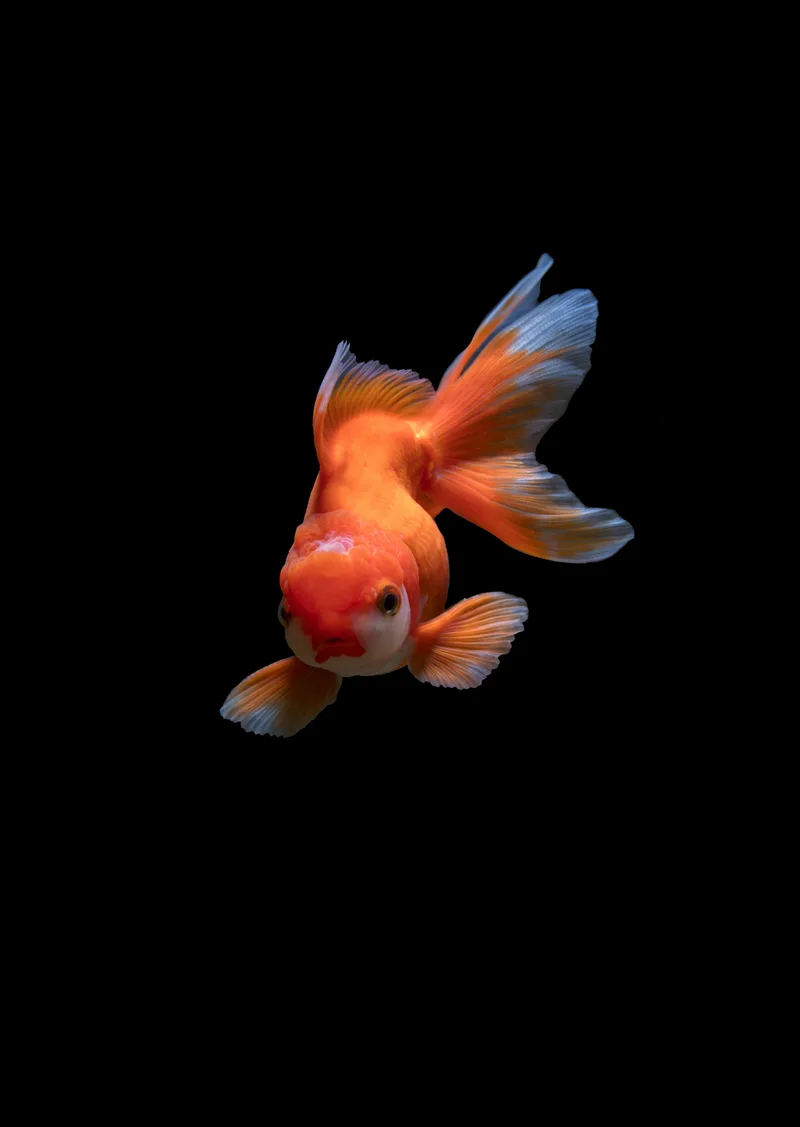
Yes, and better than almost any other freshwater fish. Goldfish (Carassius auratus) have been trained in lab studies to tell the music of Bach apart from Stravinsky, which is to say their hearing is sharp enough to pick up patterns most people would expect a fish to miss entirely. Your voice carries through the glass into the water, and so do your footsteps and the rattle of the food container. The reason a goldfish has this kind of ear at all comes down to a small piece of anatomy most fish do not have, and it changes how you should think about the noise around the tank.
Can Goldfish Recognize Your Voice?
Your goldfish does not understand words, but it almost certainly knows the sound of you. Goldfish learn associations quickly, and the sounds and vibrations that reliably precede food are the ones they learn fastest. Your footsteps on the floor, the particular pitch and rhythm of your voice, the creak of the cabinet where you keep the food: all of these travel through the water as pressure waves, and a goldfish that has been fed by the same person for a few weeks has already filed them together into a single prediction. When you walk into the room and the fish rises to the surface, it is not reading your mind. It is reading its own data.
This is association, not language. The goldfish has learned that a specific sound signature predicts food arriving at the surface. A different voice, a different set of footsteps, a stranger opening a different cabinet will not trigger the same response, at least not right away. The fish can learn a new set of cues if the new person becomes the regular feeder, but the old association fades slowly rather than switching off at once.
Goldfish that recognize their regular keeper and react differently to strangers are using sound alongside sight, smell, and the timing of the daily routine. Hearing is one channel in a bundle of cues the fish cross-references constantly.
How Do Goldfish Actually Hear?
Goldfish belong to the Ostariophysi, a large group of fish that share a piece of anatomy most other fish lack: Weberian ossicles (small bones connecting the swim bladder to the inner ear). The swim bladder is an air-filled sac that the fish uses for buoyancy, but it also vibrates when sound waves pass through the water. In most fish, those vibrations just dissipate. In a goldfish, the Weberian ossicles pick them up and relay them directly to the inner ear, turning the swim bladder into something like a biological amplifier. The result is hearing sensitivity that is dramatically better than what a bass or a trout can manage.
Inside the inner ear, tiny dense structures called otoliths (ear stones) sit against beds of sensory hair cells. When a sound wave arrives, the otolith moves at a slightly different rate than the surrounding tissue because it is denser, and that difference bends the hair cells. The bending is the signal. Your own inner ear works the same way, just packaged differently.
Goldfish also have a lateral line, the row of pressure-sensitive pores running along each side of the body. The lateral line detects water movement and very-close-range vibrations rather than sound in the way we think of it. Think of it less as hearing your voice and more as sensing the wake of a nearby fish or the turbulence from a filter outflow. Between the Weberian apparatus, the otoliths, and the lateral line, a goldfish is picking up sound and vibration through three overlapping systems at once.
Did you know? In lab experiments, goldfish have been trained to distinguish between the music of Bach and Stravinsky. They learned to press a lever when one composer's music played and ignore the other, suggesting their hearing is sharp enough to tell apart complex sound patterns that even some human listeners find hard to separate on first pass.
Can Loud Noises Stress Out Your Goldfish?
Because goldfish hear so well, they are also more vulnerable to noise than most aquarium fish. Research has shown that goldfish exposed to loud noise for just ten minutes experience a measurable shift in their hearing threshold, and after 24 hours of continuous noise exposure, that shift can reach 28 decibels. Recovery takes about two weeks. Their cortisol levels (a physiological stress marker) spike within the first ten minutes of loud noise, too. This is not a fish that shrugs off a noisy room.
In a home aquarium, the practical sources of noise that matter are:
- TV at normal volume. Not a real concern. Conversational-level sound and normal television do not produce the kind of sustained intensity that causes measurable effects.
- Loud music or heavy bass. A real concern, especially speakers placed near the tank or on the same surface. Bass frequencies travel through solid objects and water efficiently, and a subwoofer on the same shelf as the tank is delivering more sound energy to the water than you hear from across the room.
- Filter and pump hum. Rarely a problem on its own. A well-functioning filter produces low-level, consistent noise that the fish acclimatizes to. A rattling or vibrating filter is a different story, since irregular mechanical vibration transfers directly through the glass.
- Doors slamming near the tank. A sharp impulse that travels through the floor and the tank stand. The fish startles because it registers a sudden pressure wave. Occasional door slams are not going to cause hearing damage, but a tank next to a frequently slammed door is getting startled multiple times a day, and chronic startle responses are a stressor.
- Tapping the glass. The single worst thing you can do casually. Your finger against the glass produces a sharp, loud sound inside the tank that is far more intense than it sounds from the outside. It is the aquarium equivalent of someone banging on your window. Do not tap the glass, and if you have kids or visitors who do it, it is worth stopping them.
The simplest changes are placement and habit. Keep the tank away from speakers, subwoofers, and doors that slam regularly. If the tank is on a shared surface with anything that vibrates, put a foam mat or rubber pad under the tank stand to absorb the transmission. And leave the glass alone.
Do Goldfish Recognize Their Owners?
Hearing is part of how a goldfish identifies the people around it, but sight does more of the heavy lifting. Goldfish are tetrachromats with a wide field of view, and studies have shown that fish can learn to distinguish between individual human faces with surprising accuracy. Your goldfish is building a composite picture of you from your shape, the way you move, the colors you wear, and the sound of you approaching, and it updates that picture over time. A stranger walking into the room will not match enough of those cues to trigger the same front-of-the-glass response you get.
So talking to your goldfish is not silly. The fish genuinely registers your voice as part of its world, even if it is not following the words. Goldfish that learn to distinguish their regular keeper from other people are using everything available to them: sight, sound, vibration, and routine. They are far more aware of their surroundings than the old three-second-memory myth ever gave them credit for, and their hearing is one small piece of that bigger picture.