Are goldfish easy for beginners?
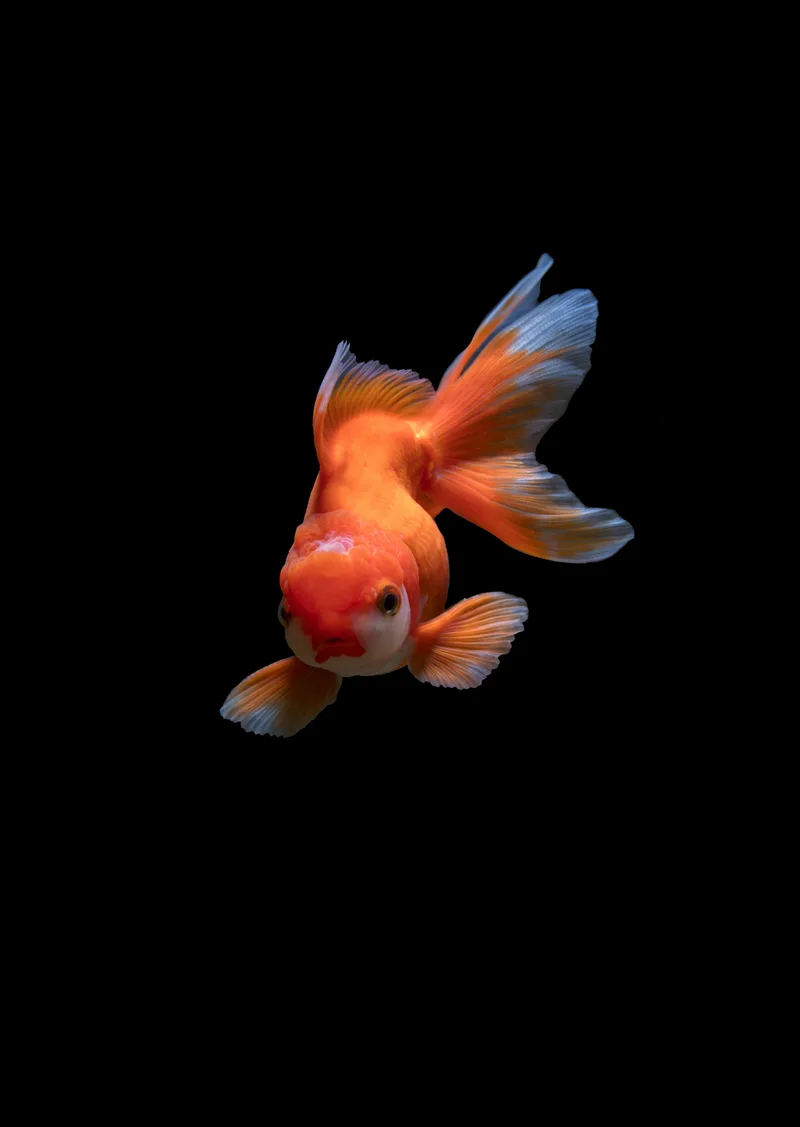
Yes, a goldfish (Carassius auratus) is one of the most forgiving fish a beginner can start with, as long as you give it a real filtered tank instead of a bowl. The strange part is that its toughness is exactly what gets it killed. A goldfish tolerates bad water far longer than most fish, so the one in the bowl can look fine for months while it is quietly being poisoned and stunted, which is why so many die young. What actually decides your outcome is the tank you give it, and how big that tank has to be comes down to one choice: fancy goldfish or common.
What does it actually take to keep a goldfish?
Most of what people worry about with goldfish does not matter much. A handful of things matter a lot. Get these right and the fish mostly takes care of itself.
- Enough water. Start at 20 gallons (75 L) for a single fancy goldfish, and add about 10 gallons for each extra one. A common or comet goldfish needs far more, closer to 75 gallons (285 L) or a pond, because it grows much bigger.
- A filter built for a messy fish. Goldfish eat a lot and produce a lot of waste, so size the filter generously. A filter rated above your tank volume is a safe bet, not overkill.
- No heater. Goldfish are coldwater fish and do best at 65 to 72°F (18 to 22°C). Room temperature in a normal home is usually fine, and heating the water shortens their lives.
- Weekly water changes. Take out and replace roughly a quarter to a third of the water once a week. This is the single habit that keeps a goldfish alive for a decade.
- A light hand at feeding. Feed once or twice a day, only what they finish in a minute or two. Most goldfish are overfed, not underfed.
None of this is hard. It just has to happen, which is the part a bowl skips.
If goldfish are so hardy, why do so many die young?
Because hardy and easy are not the same thing, and a goldfish is the fish where that gap is widest.
A goldfish produces a large amount of waste for its size. In a tank with a filter and weekly water changes, that waste gets processed and carried away. In a bowl, it has nowhere to go. The waste breaks down into ammonia, and ammonia is poison to fish even in small amounts. It builds up in the water, burns the gills, and slowly stunts the fish or kills it outright.
Here is the part that fools people. A goldfish can survive in that rising ammonia far longer than a tetra or a betta would. It does not roll over and die in a week, so the bowl looks like it is working. The fish is not fine, though. It is being slowly poisoned in a way that does not show until it is too late. The very toughness that makes a goldfish forgiving is what hides the problem from a beginner, who keeps coasting on a bad setup right up until the fish suddenly declines.
Did you know? Goldfish routinely live 10 to 15 years in a proper tank, and the oldest one on record lived to 43. Set that against the months-to-a-year most bowl-kept goldfish manage, and you get a sense of how much the setup, not the fish, decides the outcome.
Is a fancy or common goldfish easier for a beginner?
This is the choice that really decides whether "easy" is true for you, and it comes down to how big the fish gets.
Common goldfish, along with comets and shubunkins, are the slim, fast-swimming, single-tailed kind you see in fair tanks and ponds. They grow to 10 to 14 inches (25 to 35 cm) and need pond-scale space and filtration to do it properly. For most people keeping a fish indoors, that is simply more tank than they can give.
Fancy goldfish are the round-bodied, double-tailed varieties: Oranda, Ryukin, Fantail, Black Moor, and the like. They top out around 6 to 8 inches (15 to 20 cm) and fit comfortably in a 20-gallon-plus tank, which makes them the realistic beginner choice for an indoor setup. The trade-off is that their compact, bred-for-shape bodies make them a bit more prone to swim bladder trouble, where the fish struggles to stay upright or sinks and floats oddly. For an indoor beginner with limited space, a fancy is almost always the better starting point. If you are still weighing the two body types against each other, the size each one reaches is the deciding factor.
What trips up new goldfish keepers most?
Almost every goldfish that dies young is lost to the same short list of mistakes, and all of them are avoidable.
The bowl is the big one. With no room for a filter and no water volume to dilute waste, a bowl works against everything a goldfish needs, which is why it is the first thing to skip. Overfeeding comes next, since uneaten food rots and fouls the water as surely as waste does. Skipping the tank cycle is another quiet killer: a brand-new tank has not yet grown the bacteria that turn ammonia into something harmless, so a fish dropped into fresh water gets hit with a chemical spike in its first weeks. And plenty of people assume the small fish in the bag stays small, then are surprised when it outgrows the tank.
You can see the pattern in the handful of errors that catch beginners: every one of them is about the setup, not the fish. That is the honest answer to whether a goldfish is easy. It is easy exactly in proportion to the tank, the temperature, and the variety you give it. Get those right and you have a smart, social fish that can stay with you for a decade or more. This holds for the parent buying one for a child, too: a goldfish makes a fine first pet, as long as the adult, not the kid, owns the upkeep.