How many goldfish should be in a tank together?
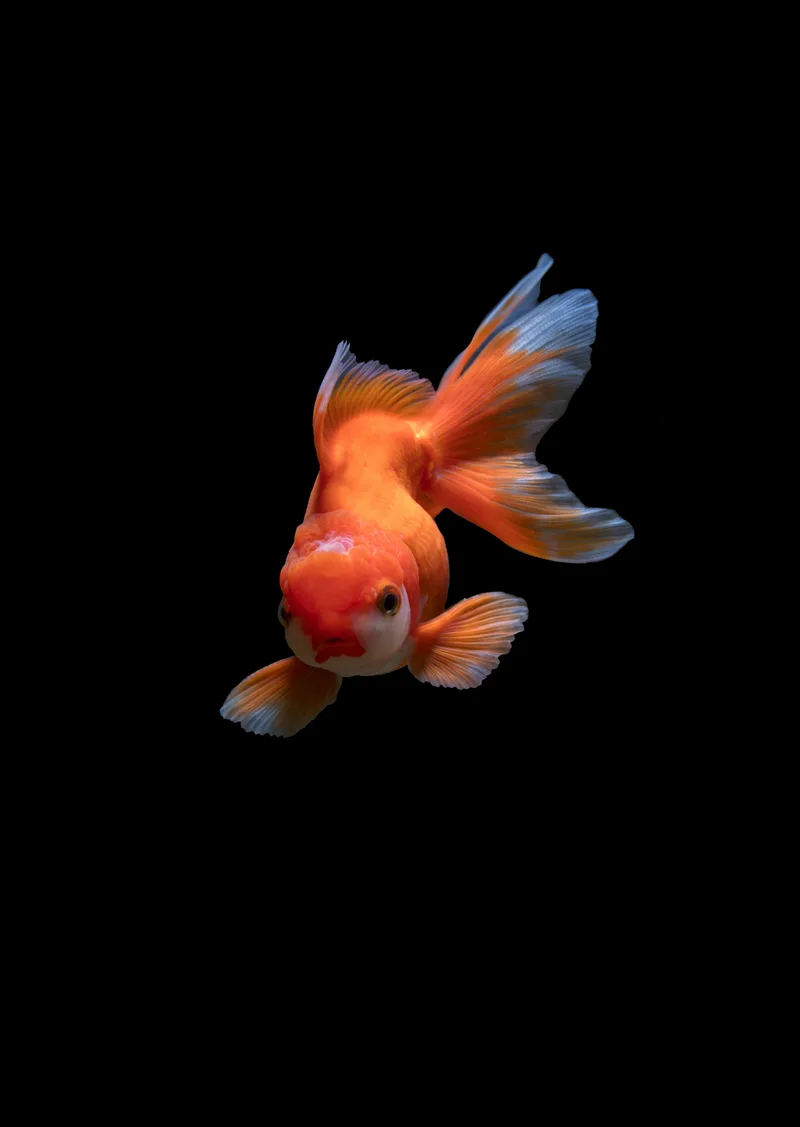
Two or three of the same type, in a tank sized to the type. For fancy goldfish (Oranda, Ryukin, Black Moor, Fantail), that means 20 gallons for the first fish and 10 more for each one after. For common goldfish, comets, and shubunkins, you are looking at 75 gallons minimum and an honest argument for a pond. The reason "how many goldfish" has two different answers is that "goldfish" covers two very different fish: one stays palm-sized and slow, the other grows past a foot and swims like it has somewhere to be. Once you know which type you have, the count almost decides itself.
What's the actual stocking number for my tank?
Here is the lookup, in numbers most readers can buy off the shelf. The cell tells you how many adult fish the volume can carry, not how many baby goldfish will fit at first.
| Tank size | Fancy goldfish (Oranda, Ryukin, Black Moor, Fantail) | Common, Comet, Shubunkin |
|---|---|---|
| 5 gal (19 L) | None, too small | None, pond only |
| 10 gal (38 L) | None, too small | None, pond only |
| 20 gal (76 L) | 1 | None, pond only |
| 30 gal (114 L) | 2 | None, pond only |
| 55 gal (208 L) | 3 to 4 | 1, as a stopgap |
| 75 gal (284 L) | 5 | 1 to 2 |
| 100 gal+ (380 L+) | 6+ | 2 to 3, pond preferred |
Two things worth saying about this table. The numbers assume the fish are at adult size, because that is what they will be for most of their lives if you keep them well. A 20-gallon tank that "fits four little goldfish" today is going to be a 20-gallon tank with four ten-inch fish in it three years from now, and that is the version you have to plan for.
The other thing is filtration. A bigger filter or weekly water changes do not let you cheat the volume. They are the price of admission for the stocking the volume already allows. If you put more fish in a 30-gallon tank than the table says, more filter does not buy you more fish, it buys you a slightly less polluted tank that is still overstocked.
Does the answer change for fancy vs. common goldfish?
Yes, and this is the single biggest variable in the whole question, bigger than tank shape, bigger than filter brand, bigger than substrate.
Fancies stay around 6 to 8 inches as adults. They are slow swimmers with rounded bodies, and they handle group living in moderate volumes because they don't need the open lap-distance that a torpedo-shaped fish does.
Commons, comets, and shubunkins are a different animal in everything but name. They reach 10 to 14 inches, sometimes more in a pond, and they swim hard. A common goldfish in a 55-gallon tank is a fish that wants a ten-foot pond and is making do. The straight framing is that these are pond fish kept indoors as a stopgap. Some of them live full lives that way, but the home aquarium is not where they were headed.
Mixing the two types in one tank is usually a bad idea, and the reason is feeding rather than aggression. The fast swimmers reach the food first, every meal, and the slow fancies end up underfed even when you are pouring in plenty. Over a year, the fancy gets thin and the common gets huge.
Which goldfish varieties actually mix well together splits more along body shape and swim style than along color, so a calico fancy and a black moor get along fine while a comet and a ryukin do not.
Do goldfish actually need company, or is one enough?
Goldfish are social. They recognize their tank mates, they swim with them, and a pair is visibly more active than a single fish in the same tank. So when readers ask "how many," part of what they're asking is whether keeping one alone is unkind.
The honest answer sits in the middle. If your tank has the gallons for two, keep two. They will be more interesting to watch and the fish will spend more time out in the open. If your tank can only fit one, one is better than two crammed into a tank that can't carry the bioload. A single fancy goldfish in a 20-gallon tank is not living a sad life. An overstocked 20-gallon tank with two of them is.
The why under all of this is worth a second. Goldfish in the wild form loose groups, but unlike strict shoaling fish such as neon tetras, they don't depend on the group to feel safe. A solitary goldfish is not constantly scanning for predators the way a solo neon tetra is. They are sociable rather than fragile-without-company, and that is the difference that makes the one-fish setup workable when the alternative is overstocking.
Keeping one goldfish versus two usually comes down to whether your tank can hold the bioload of a second adult fish, not whether one fish will be lonely on its own.
What if I already have more goldfish than my tank should hold?
A lot of casual owners arrive at this question after the fish are already in the tank. The math says you are over, the kids have named them, and rehoming feels enormous. Start by reading the tank, not the table.
A tank can be technically inside the stocking number and still be overstocked for the bioload it has. The fish themselves will tell you. Watch for these signs:
- Fish gasping at the surface, especially in the morning before lights come on
- Ammonia or nitrite that won't drop below zero between water changes
- Cloudy water that doesn't clear up in 24 to 48 hours
- Slow growth, stunted bodies, or visibly bent spines as the fish age
- Frequent fin damage or fish chasing each other at feeding time
- Fish hanging listless near the filter outflow rather than swimming through the tank
- Substrate going dirty within a few days of cleaning
If two or three of those are true, you are over.
The fix has an order, and skipping the order doesn't work. First, increase your water changes. Two 50% changes a week buys you real time, more than any other single move. Second, add or upgrade filtration so the bioload is being processed faster between those water changes. Third, commit to the actual answer: a bigger tank or rehoming one or two of the fish. Both are real options, neither is failure. Extra filtration buys you time, not permission to skip the upgrade.
The thing every owner eventually realizes is that the goldfish question was never really a tank-size question. It was a fish-type question wearing a tank-size disguise. Once you know whether you have fancies or commons, the count almost decides itself, and the gallons follow. The long-lived, peaceful goldfish tank is not the bowl-and-bubbler image most of us grew up with, but it isn't out of reach either. It just sits at the size that matches the fish you actually have.