Can I put 1 goldfish in a 10 gallon tank?
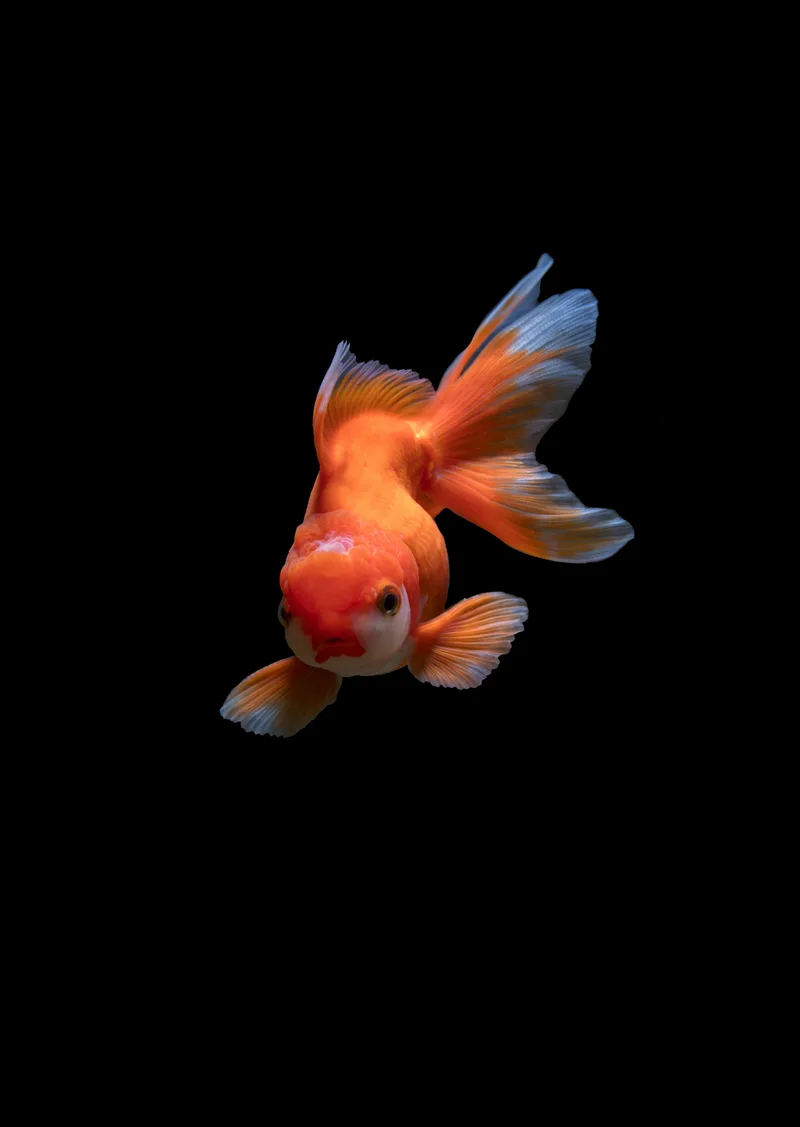
No, not as a permanent home. A single adult fancy goldfish (oranda, ryukin, fantail, black moor) needs 20 to 30 gallons; a common, comet, or shubunkin needs 40 or more. A juvenile fancy can ride out a few months in a 10 gallon while you set up something bigger, but only as a bridge. The cost of getting this wrong is the reason most goldfish die at a couple of years old instead of the 10 to 15 their bodies are built for. A tank too small stunts the fish quietly, over months, in ways you do not see until it is too late.
How Long Can One Goldfish Actually Live in a 10 Gallon Tank?
The answer depends on which goldfish you have and how hard you are willing to work on water changes.
A young fancy goldfish under about 2 inches can live in a 10 gallon for roughly three to six months if the water chemistry stays clean. "Clean" here is not a feeling, it is numbers: zero ammonia, zero nitrite, nitrate under 40 ppm. Hitting those numbers in a tank this small means 30 to 50% water changes twice a week and a filter rated for a tank two or three times the size. During those months your job is to get the next tank cycled and ready.
Commons, comets, and shubunkins do not get this window. They grow fast, they are built to swim long distances, and they foul water faster than a fancy of the same length. Weeks, not months. If you have one in a 10 gallon right now, treat it as a holding setup and move as soon as you can.
In both cases, a 10 gallon is a bridge. The maintenance load is the price of the bridge.
- Test the water at least once a week with a liquid test kit, watching ammonia and nitrite specifically. Either one above zero means a water change today, not tomorrow.
- Do 30 to 50% water changes twice a week, using a dechlorinator and water matched to the tank temperature.
- Feed once a day, a pinch the fish finishes in about 30 seconds. Goldfish beg constantly and overfeeding is the fastest way to spike ammonia.
- Watch for clamped fins held tight against the body, hanging near the surface gulping, or red streaks in the fins. Any of those means the water chemistry has slipped and needs an immediate change.
- Start pricing a 20 to 30 gallon tank now. Used tanks on local marketplaces are usually half the price of new, and a glass tank does not wear out.
What Actually Goes Wrong in a Tank That's Too Small?
Goldfish produce far more waste than a tropical fish of the same length. They have no true stomach, so food moves through them almost continuously, and their digestive system pushes ammonia and nitrogenous waste into the water around the clock. Drop that waste load into 10 gallons instead of 40 and the concentration climbs faster than the filter and the beneficial bacteria can keep up.
There is also the oxygen side of it. Goldfish are coldwater fish, happiest around 65 to 72°F, and cold water holds less dissolved oxygen than warm water. A small tank already has a small surface area for gas exchange, and now you are asking that surface to supply enough oxygen at the exact temperature where oxygen is hardest to come by. The fish ends up working its gills harder for less.
Did you know? A well-kept goldfish routinely lives 10 to 15 years, and the oldest on record made it past 40. The "my goldfish only lived two years" story is almost never about goldfish being short-lived fish. It is almost always about the bowl or the 5 gallon they were kept in.
The damage from all this is slow, which is part of why it gets missed. Over weeks and months, elevated ammonia and nitrite burn the delicate tissue of the gills and fins, the same way chlorine burns human skin. Over years, a fish kept in a tank too small to let it grow produces a visibly stunted body: a head that looks too big, a spine that curves, organs that kept growing while the skeleton did not. The fish does not know it is stunted. It just dies younger than it should.
The underlying reason is function. A goldfish's body is built for a big volume of cool, well-oxygenated water with room to move. Put it in a small warm bowl and every system it runs on, from waste processing to oxygen uptake to skeletal growth, is operating outside the conditions it evolved for. There is nothing cruel about the fish's biology here. It is just that the body works best where the body expected to be.
Does the Answer Change for a Fancy vs. a Common Goldfish?
Yes, and this is the fork worth paying attention to before you buy a tank.
Fancy varieties (oranda, ryukin, fantail, black moor, and the rest of the short-bodied, round forms) top out around 6 to 8 inches. They are slow, deliberate swimmers. Body shape does most of the work here: a compact, rounded body does not need the long stretch of swimming room a torpedo-shaped fish does. A single adult fancy can live its full decade-plus in a 20 to 30 gallon tank.
Commons, comets, and shubunkins are a different animal. They reach 10 to 14 inches as adults, and they are built for speed: long, streamlined bodies that want to move. A fish like that in a 10 gallon is the aquatic equivalent of a greyhound in a bathroom. The adult home is 40 to 75 gallons at minimum, and many keepers eventually move them outside to a pond.
| Variety | Adult size | Minimum tank for one adult |
|---|---|---|
| Common, Comet, Shubunkin | 10 to 14 inches | 40 to 75 gallons (or a pond) |
| Fancy (Oranda, Ryukin, Fantail, Black Moor) | 6 to 8 inches | 20 to 30 gallons |
If you are not sure which one you have, the fastest tell is the body. Single tail, long and slim, one of everything? Common-type. Double tail, round belly, often with a growth on the head or bulging eyes? Fancy.
How Big Should the Tank Actually Be for One Goldfish?
The short version: 20 to 30 gallons for one adult fancy, 40 gallons or more for one common, comet, or shubunkin. Footprint matters as much as volume, since goldfish need room to turn and cruise rather than depth they rarely use, so a long, shallow tank beats a tall cube of the same capacity.
Those numbers change once you add a second fish, and tank size scales faster than one-fish-per-gallon math suggests because two goldfish produce more than twice the waste of one active fish cruising alone.
If you are reading this because you were hoping a bowl or a 2.5 gallon would be a fix in the other direction, the problem with keeping goldfish in a bowl comes down to the same mechanics at smaller scale: waste concentrates faster, oxygen is harder to replace, and the fish pays for it quietly over time.
Most goldfish do not die of goldfish problems. They die of the container they were kept in, and that is a problem with a clear fix: a bigger tank, a filter that can keep up, and the fish gets the 10 to 15 year life its body is built for.