What type of goldfish can live together?
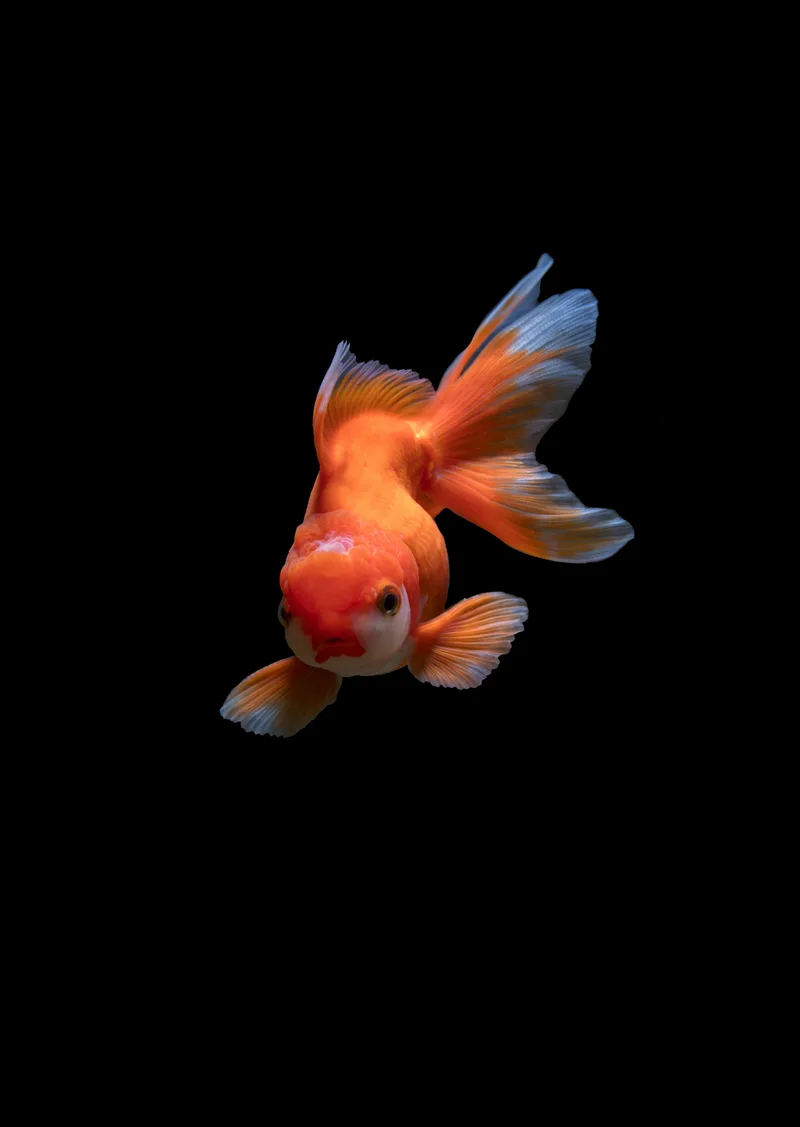
Almost any goldfish can live with another goldfish, as long as you match them by body type: keep the round-bodied fancies like the Oranda, Ryukin, and Black Moor together, and keep the slim single-tailed swimmers like the common, comet, and shubunkin together. The surprise is why mixing the two groups goes wrong. It isn't fighting. Goldfish are peaceful, and they won't squabble over territory or a mate. The problem is feeding: a fast comet quietly out-eats a slow Black Moor at every single meal, and after a few weeks of that, the slow fish is the one that's starving in a tank that looks perfectly calm.
How Do I Group Goldfish So They Get Along?
Sort your goldfish into two camps, and keep within a camp.
The first camp is the slim, single-tailed fast swimmers: the common goldfish, the comet, and the shubunkin. These are torpedo-shaped fish built to move, and in a pond they'll cover the whole length of it in a few seconds.
The second camp is the round-bodied, double-tailed fancies: the Oranda, Ryukin, Fantail, Ranchu, Lionhead, Black Moor, Telescope, Bubble Eye, and Pearlscale. Their short, deep bodies and split tails make them slow and a little clumsy in the water, which is exactly what they were bred to be.
The practical reason to keep within a camp is simple: fish of the same body type swim and feed at the same pace, so no one gets left behind at feeding time. Color and pattern don't matter here at all. A calico shubunkin and a plain orange comet belong together because they swim alike, and a black Oranda and a red-cap Ryukin belong together for the same reason. You can mix colors freely inside a camp.
| Slim-bodied, fast swimmers | Round-bodied fancies |
|---|---|
| Common goldfish | Oranda |
| Comet | Ryukin |
| Shubunkin | Fantail |
| Ranchu | |
| Lionhead | |
| Black Moor | |
| Telescope | |
| Bubble Eye | |
| Pearlscale |
One note inside the fancy camp: the Black Moor, Telescope, and Bubble Eye have poor eyesight on top of their slow bodies, so they're the slowest feeders of all. They do best with calmer, similarly limited-vision tankmates rather than the quicker fancies like the Fantail or Comet-tailed Oranda. If you want the full breakdown before you decide what to put together, it helps to know exactly how fancy and common goldfish differ in shape, speed, and care.
Why Can't Fancy and Common Goldfish Live Together?
The split comes down to how the two groups are built, and what that does at feeding time.
A common goldfish or a comet still carries the streamlined, torpedo shape of its wild ancestors. It's fast, it turns on a dime, and it reaches food the instant it hits the water. A fancy goldfish has been bred in the other direction for centuries, toward a short, round body and a split tail. Those traits look striking, but they make the fish a slow, careful swimmer that has to work to get anywhere.
Put the two together and the problem isn't aggression. Nobody is chasing anybody. The fast fish simply gets to the food first and eats the most, meal after meal. The fancy paddles over a few seconds late to find the food already gone. One feeding doesn't matter. Over weeks, though, the slow fish steadily loses ground, eating less than it needs while the fast one eats more, until the fancy is underfed and stressed and the common is fat and fine.
The limited-vision varieties lose this race even harder. A Black Moor or a Bubble Eye can barely see the food, let alone outrace a comet to it. They're at the back of the line before the race even starts.
It's just a fast eater and a slow eater sharing one bowl, and the fast eater winning every time.
Did you know? Every goldfish variety, from the foot-long comet to the wobbling bubble eye, is the same species: Carassius auratus, all descended from the same domesticated Prussian carp. The dramatic differences in body and tail aren't separate kinds of fish. They're roughly a thousand years of selective breeding acting on one animal.
What If I Already Mixed Them and It Seems Fine?
A mixed tank can look perfectly fine for a while, which is exactly what makes it tricky. The question isn't whether the fish are getting along today. They almost certainly are. The question is whether the slow one is getting enough to eat, and that takes weeks to show.
There's a real difference between a mixed tank that's genuinely working and one that's failing without showing it. A working one usually has plenty of space, you're target-feeding the slow fish so it gets its share, and every fish is holding its weight. A failing one looks fine on the surface while the fancy slowly slims down behind the scenes. The early signs are easy to miss if you're not watching for them.
Here's what to watch for in the round-bodied fish:
- It's looking thinner, or its belly has gone from rounded to a little sunken.
- It hangs back or gives up at feeding time while the others rush in.
- It's growing noticeably slower than its tankmates over a month or two.
- It spends more time resting on the bottom and less time cruising.
- The food is gone by the time it arrives.
If you're seeing a couple of these, you don't have to break the tank up tomorrow, but you do need to act. The simplest fix is to target-feed the slow fish: drop sinking food right in front of it, or feed it at one end of the tank while the fast fish are busy at the other. If that doesn't even the score, separate the two groups into different tanks. Catching it at the "looking a bit thin" stage is the whole game, because the alternative is finding out when the fish is already wasted.
Can Goldfish Live with Koi?
The same logic scales straight up to koi, and the answer is mostly no. A koi is even larger, faster, and more food-driven than a common goldfish, so against a slow fancy it's the body-type mismatch taken to an extreme. The fancy wouldn't get a single pellet.
Koi can share space with commons and comets, since those are fast eaters too, but only at pond scale. A koi grows to a foot and a half or more and needs the room of an outdoor pond, not a tank. A typical home aquarium is too small for a koi no matter what else is in it, so for most people keeping goldfish indoors, koi simply aren't on the table. If you're weighing it anyway, it's worth knowing whether goldfish and koi can actually share water and how much space that really takes.
It all comes back to the same thing. Goldfish compatibility was never about temperament, because goldfish don't fight. It's about whether the slowest fish at the table still gets enough to eat. Group your goldfish by body type and that problem disappears before it starts. Ignore it, and the tank will look peaceful right up until the slow fish quietly fades.