Why is my goldfish turning white?
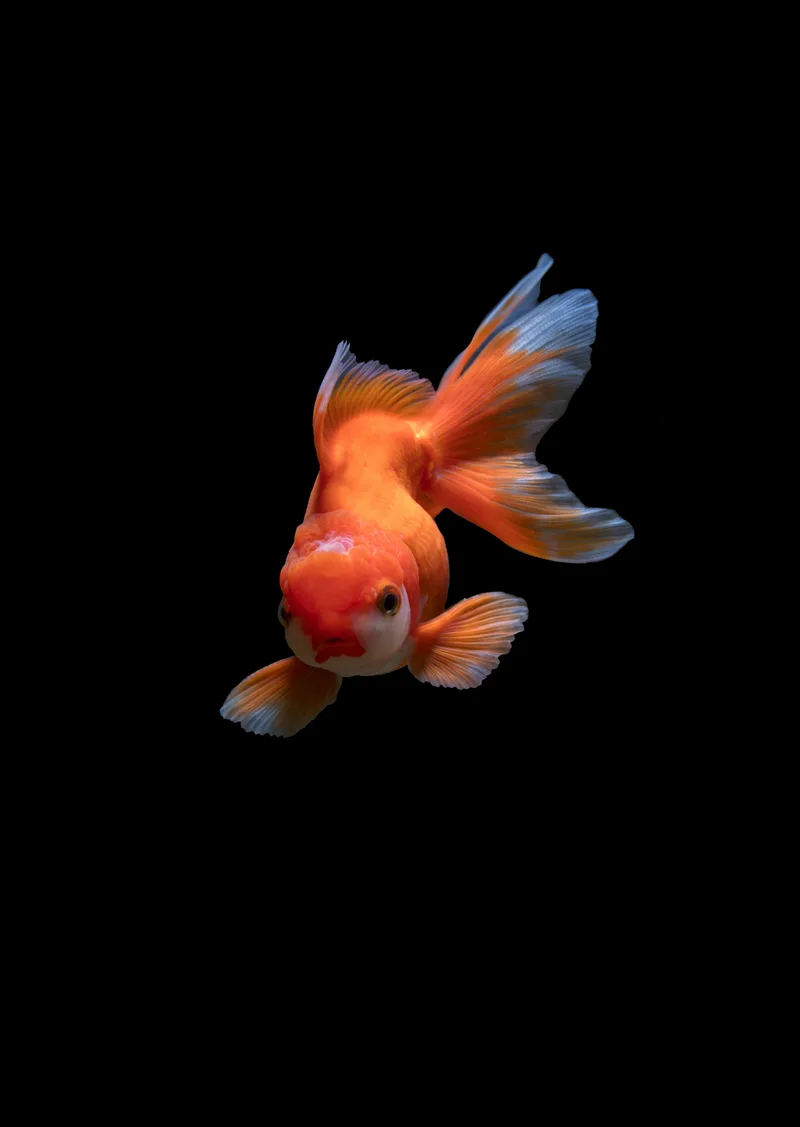
In most cases, a goldfish turning white is normal: the bright orange of a pet goldfish was bred for visibility, not stability, and a lot of fish gradually lose it as they age. The catch is that two very different things look almost the same in the tank. A fish that is fading flat and smooth is doing what goldfish have been doing for a thousand years. A fish that is going white in fuzzy tufts, patchy films, or tiny salt-grain spots is sick, and the difference can be hours of telling them apart.
Is this normal or something to worry about?
For an otherwise healthy-acting goldfish, gradual color fading is almost always normal. Most goldfish lose some pigment over months to years, and quite a few end up fully white or silver by old age. If your fish is still eating, still swimming around at its usual times, and the color change is slow enough that you only noticed because you compared it to a photo, you are almost certainly watching ordinary aging.
What flips that answer is when the color change comes with something else. A short triage:
- Probably nothing to worry about: gradual fade over weeks or months, otherwise normal behavior, eating well, active during the day, fins held normally.
- Look closer: color shifts noticeably over a few days, the fish is lethargic or hiding more than usual, fins are clamped tight against the body, breathing fast at the surface, or the white area looks raised, fuzzy, or textured rather than flat.
If everything on the first list is true and nothing on the second is, you almost certainly have a normal aging fish. If anything on the second list is true, treat the color change as a symptom and start looking for what else is going on.
What if the white is fuzzy, patchy, or raised?
The most useful distinction here is between flat color loss and disease that looks like color loss. Run your eye carefully over the white area. If the scales look the same as the rest of the fish, just paler, that is pigment loss. The fish is the same shape it always was, the surface is smooth, nothing is sticking up.
If the white area looks different from the surrounding skin in any way, you are likely looking at an infection, not aging.
| What it looks like | What it probably is | What to do next |
|---|---|---|
| Flat pale areas where scales look normal and smooth | Pigment loss from age or genetics | No action needed |
| Cottony, fluffy tufts that look like white lint stuck to the fish | Fungal infection | Quarantine and treat for fungus |
| A flat, white or grayish film, often on the head, mouth, or back | Columnaris (a bacterial infection) | Treat as urgent, isolate the fish |
| Tiny white spots, distinct from each other, like grains of salt sprinkled on the fish | Ich (a parasitic infection) | Treat with heat and ich medication |
The distinction matters because the timeline is different. Pigment loss gives you weeks or months to do nothing. Columnaris can kill a fish in 24 to 48 hours. Treating one as the other is the most common way owners end up losing a fish that did not need to be lost.
What if my goldfish is also lethargic, hiding, or not eating?
When color change shows up alongside behavior change, the color is usually not the problem. It is a downstream signal that something is stressing the fish, and stress can dump pigment in days rather than months. Fix the cause and the color change usually stops.
Start with the water. Goldfish are heavy eaters and heavy waste producers, and they crash water quality faster than most aquarium fish. Test for ammonia, nitrite, and nitrate. Ammonia and nitrite should both read zero, and the target nitrate range for goldfish sits below 40 ppm. If either ammonia or nitrite is above zero, that alone can explain everything you are seeing.
Then check the temperature. Goldfish are coldwater fish, comfortable from about 65 to 72°F (18 to 22°C). A tropical heater set to 78°F will slowly cook them, and chronic heat stress is a classic cause of color loss and lethargy showing up together.
Finally, look at the tank itself. A single fancy goldfish needs at least 20 gallons, with about 10 more gallons per additional fish, and a common or comet goldfish needs a lot more. Undersized tanks turn into ammonia traps no matter how often you clean them, and the slow stress shows up first on the skin.
Why goldfish lose color in the first place
The goldfish in your tank is the result of more than a thousand years of selective breeding from a single wild ancestor, the Prussian carp (Carassius gibelio). The wild fish is olive-gray. Every bright orange, red, white, calico, and black fish in the hobby today descends from a slow accumulation of color mutations that early Chinese breeders noticed, kept, and bred for, starting around the Jin dynasty.
Those bright colors were selected for visibility, not stability. The pigment cells that produce orange and red, called xanthophores, sit in the outer layers of the skin and have to keep producing pigment to stay bright. The cells that produce black, called melanophores, behave similarly. Both can stop renewing their pigment under stress, with age, or under prolonged light exposure, and once they do, the underlying white or silver layer becomes visible.
This is also why two genetically similar goldfish from the same spawn can take wildly different color paths through life. The color is real, but it is loosely held. The fish you bought as a bright orange comet was always somewhere on a spectrum between olive ancestor and unstable display color, and watching it drift toward pale is, in a sense, watching the genetics relax.
Did you know? Most goldfish are born nearly black or olive and only develop their adult coloration over the first six to twelve months. What looks like a fish "turning white" in old age is partly the same machinery running in reverse.
What about goldfish that turn black instead?
Color change in goldfish runs both directions, and the diagnostic logic is not the same. A goldfish turning black is more often a warning sign than benign aging. The most common cause is healing tissue after an ammonia burn, which means the fish was sitting in bad water until recently, and the dark patches are scar-like recovery on the damaged skin.
The white you are watching, though, is usually just a fish becoming more itself. Underneath every fancy goldfish color is the olive-gray Prussian carp the species started out as, and a goldfish that fades toward white over the years is not breaking down. It is partly returning to the form it would have had if no one had ever bred it for the tank in the first place.