What color were goldfish originally?
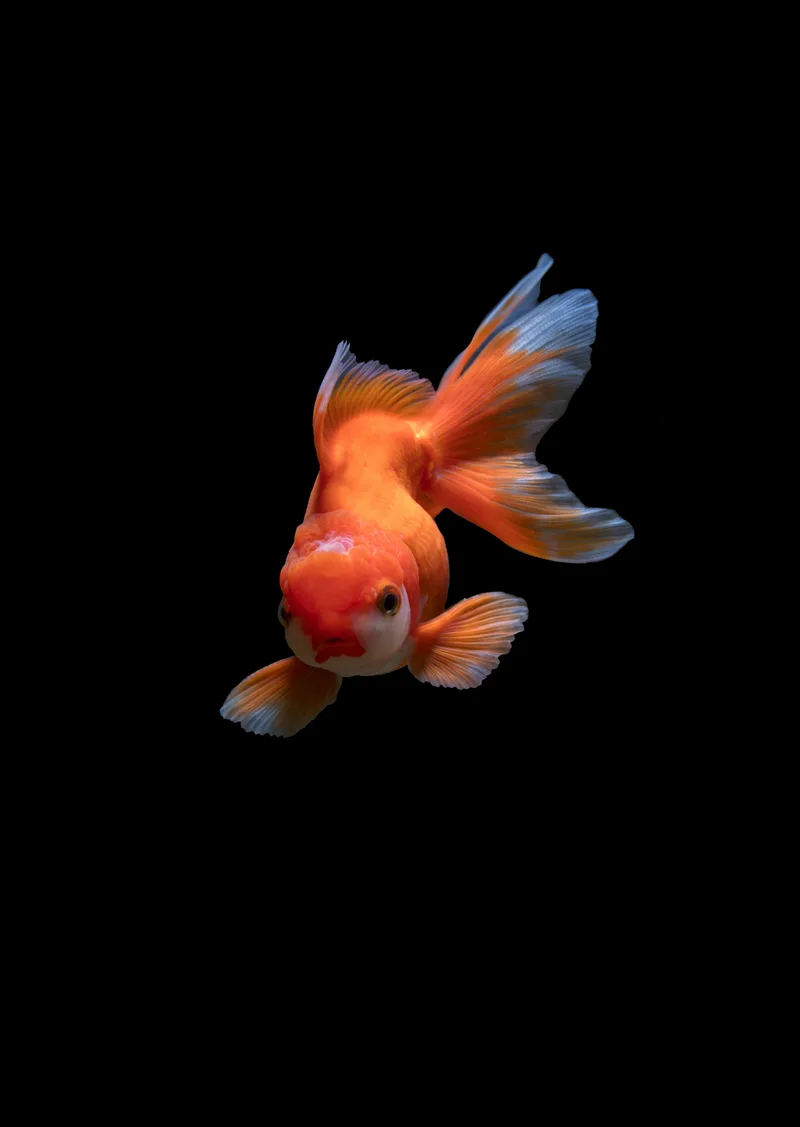
Wild goldfish are a drab silvery-olive, roughly the color of a pond minnow. The orange-gold the species is named for is a thousand-year breeding project that started in imperial China around the Jin Dynasty (266 to 420 CE), when a single fish in a temple food pond turned out yellow and someone decided not to eat it. The strange part isn't that humans changed the color. It's that the silver never went anywhere. It's still tucked under every modern goldfish's scales, and in feral populations dumped into ponds and lakes, the descendants drift back to that drab silver-olive within a few generations.
Where did the wild goldfish actually come from?
The goldfish (Carassius auratus) is a freshwater fish in the carp family, native to slow-moving waters in eastern China: ponds, ditches, sluggish stretches of river. In its undomesticated form it looks almost exactly like the kind of carp you'd pull out of a muddy farm pond: a flat-flanked, silvery-olive fish, sometimes with a faint bronze cast on the back, blending into mud and weed.
For a long time the wild ancestor was lumped together with the Prussian carp (Carassius gibelio) and the crucian carp (Carassius carassius). Older sources will tell you goldfish were domesticated from crucian carp, and you'll still see that on some history-of-goldfish pages. Modern genetic work has separated the three: goldfish are their own species, closer to gibelio than to carassius, and the wild form of Carassius auratus is distinct from both.
This matters more than it sounds. The goldfish was bred from a food fish, not from a pet. Before someone fished one out of a pond and decided it was pretty, it was just dinner. The closest living thing to an "original" goldfish is the unremarkable silver carp a farmer in eastern China would have pulled up in a net, sized up for the pot, and eaten.
Did you know? The first written record of an orange-gold mutant goldfish dates to the Jin Dynasty (266 to 420 CE) in imperial China. The fish was reportedly so unusual that releasing it into a temple pond was treated as an act of religious merit, which is part of how the gold variants survived long enough to be bred deliberately instead of eaten.
Why does carp keep throwing gold and orange mutations?
The gold isn't a paint job the fish put on. It's the silver paint job coming off.
A goldfish scale has two pigment layers. The top one is a reflective coating made of guanine crystals, the same compound that gives most freshwater fish their flashy silvery sheen. Underneath sit yellow, orange, and red pigments called carotenoids, which the fish builds up from its diet. In a wild fish the silver layer dominates and the carotenoids barely show through. The fish reads as silver with a hint of olive on the back, and you'd never know there was warm color underneath.
The catch is that the silver layer is genetically fragile. A single recessive mutation can knock out the guanine coating across the body, and the moment it's gone the carotenoids underneath have nothing to hide behind. The fish lights up gold or orange or red, depending on what it's eaten. Members of the carp family in general carry this trait, which is why almost every domesticated carp in the world (goldfish, koi, ornamental crucians) comes in some version of the same warm color palette. The mutation is rare in any single fish, but in a pond of thousands of carp it's only a matter of time before one of them shows up gold. The wild form survives because predators eat the gold ones; the domestic forms exist because, eventually, somebody decided not to.
Do feral goldfish revert to their original color?
Yes, and within a surprisingly small number of generations.
When pet goldfish escape into a pond or get dumped into a lake, their descendants tend to drift back toward drab olive-bronze within a handful of generations. The mechanism is wild selection running in reverse. A bright orange fish in a pond is a flag for every heron, raccoon, bass, and pike in the area, and selection cuts the gold ones down fast. The few silver-olive throwbacks in any clutch of fry survive better, breed more, and within four or five generations the population looks like wild Carassius auratus again. The gold genes are still in there. They're just not on display anymore.
You can see this in the wild now. Goldfish are an invasive species across much of North America and Australia, and the populations look nothing like the fish in a pet-store tank. They're heavy-bodied, olive-brown, and they get big. Released hobbyist goldfish in suitable water bodies have given rise to feral populations that compete with native fish, stir up sediment, and damage water quality. That is why dumping a goldfish into a local pond is illegal in most places and a bad idea regardless.
Did you know? Feral goldfish in Lake Tahoe and parts of the Great Lakes have grown to two- and three-pound olive-brown specimens that look almost nothing like the fish in a pet-store tank. Genetically, they are the same species, just a few generations of pond life away.
What goldfish colors are rarest today?
The wild color became the rare color. After a thousand years of breeders pulling out anything that wasn't bright, the modern hobby has flipped the rarity chart upside down: solid, true silver (the original) is now one of the harder colors to find in the trade, along with deep blues, chocolates, and the cleaner end of the black and white ranges. Calico and panda patterns sit somewhere in the middle, depending on the variety. The default orange the fish started off as a deviation from is the standard now, and the original silver gets sold as a novelty.
That flip is most of the story. The fish in your tank is gold for the same reason your dog is friendly: a long line of humans selecting for something the species would never have settled into on its own. The word "gold" itself rode along on that selection. In Tang-era Chinese it covered the whole yellow-orange range we now split into two colors, and once the Song court reserved yellow scales for imperial use, the high-status "gold" label stuck to the fish. The name describes a value judgment, not a precise hue, which fits, because the color it points at only exists because somebody, somewhere, kept choosing it. The "original" color of the goldfish is best thought of less as something buried in a Chinese dynasty and more as the color a feral descendant of your fish would drift back to, given a few generations and a pond. Chocolate-brown and true-silver fancy goldfish sit at the top of most breeders' rarity lists for the same reason: a thousand years of selection passed them by.