Why is my goldfish turning black?
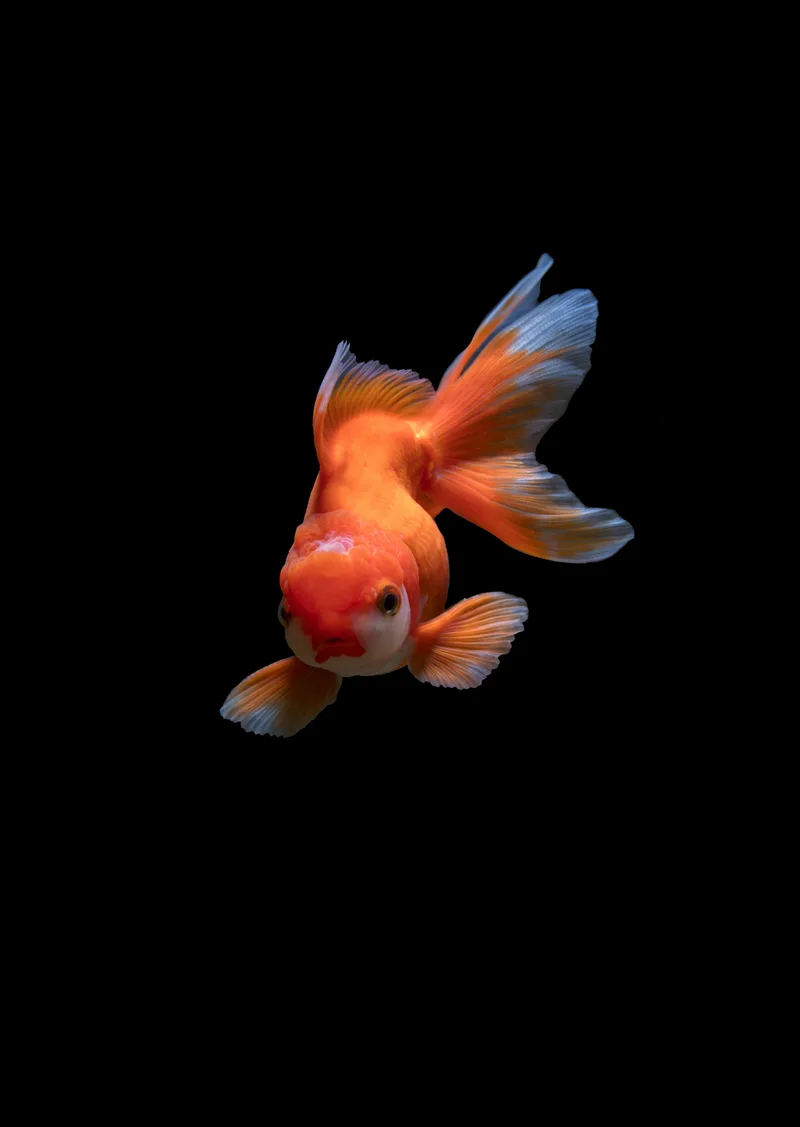
Black appearing on a goldfish almost always means one of two very different things. Either ammonia in the water damaged the skin and the dark marks are scar tissue from the healing, or the fish is genetically darkening as it grows into its adult colors. The first is a tank problem, the second is just a goldfish doing what young goldfish do, and at a glance they look almost identical. The good news is that an ammonia test reading and the location of the black tell you which one you are looking at in about five minutes.
Is It Ammonia Damage or Natural Color Change?
The single most useful tool here is a freshwater ammonia test kit. If ammonia reads above 0 ppm, treat the black as ammonia damage until something else explains it. If ammonia reads 0 and the fish is behaving normally, you are very likely watching a genetic color change.
The visible pattern of the black is the second clue. Ammonia damage tends to show up on the thinnest, most exposed tissue first: the edges of the fins, especially the trailing edge of the tail fin and the leading edge of the back fin. From there it can spread onto the body in patches that look a little like scorch marks. It often arrives suddenly, over days rather than weeks, and usually in a tank that is new, uncycled, or has recently missed a water change. The fish itself often looks unhappy as well: fins held close to the body, gulping at the surface, sitting on the bottom.
Genetic darkening looks different. It comes on slowly, over weeks or months, across larger areas of the body. It is often roughly symmetrical, like a shadow settling onto the fish. It almost always shows up on a goldfish under two years old, and most often on fancy varieties like the oranda, ranchu, or ryukin. The fish behaves normally throughout. Any goldfish that started life lighter than its parents is a candidate for this kind of change, because the adult color is still arriving.
There is also the one-fish-and-not-the-other question, which comes up constantly. Ammonia is in the water, not in the fish, so it affects every fish in the tank. But it does not always show on every fish equally. A black moor, or any goldfish that is already mostly dark, will not show ammonia marks visibly because there is no light pigment for the burns to contrast against. If one juvenile fish in a tank is darkening and the others look fine, genetics is more likely than ammonia.
| Ammonia damage | Natural color change | |
|---|---|---|
| Where it appears first | Edges of fins, then patches on the body | Larger, roughly symmetrical areas across the body |
| How fast it appeared | Days, often suddenly | Weeks to months, gradual |
| Fish behavior | Clamped fins, gasping at the surface, sitting at the bottom | Normal: eating, swimming, exploring |
| Ammonia test reading | Above 0 ppm (anything detectable) | 0 ppm |
| Other fish in the tank | Usually affected too, unless they are already dark like a black moor | Only the one fish, often a fancy variety under two years old |
What Should I Actually Do Right Now?
If the test kit shows ammonia, the fish needs clean water, not medication. Salt baths, "ammonia removers," and anti-fungal treatments are all wrong first moves here. The black patches are not an infection. They are scar tissue. Fix the water and the fish stops getting damaged.
If the test kit reads 0 across the board and the fish is acting normal, the right thing to do is nothing, and then watch.
- Test the water with a liquid test kit for ammonia, nitrite, and nitrate. Skip the paper test strips, which routinely miss low ammonia readings.
- If ammonia reads above 0, do a 30 to 50% water change with dechlorinated water at the same temperature as the tank, and repeat daily until ammonia reads 0.
- Hold off on salt, medication, and ammonia removers. Clean water is the treatment.
- If everything tests at 0 and the fish behaves normally, leave the fish alone and track the pattern for two weeks.
- Get the tank fully cycled if it is not already, since ammonia keeps coming back in an uncycled tank no matter how often you do water changes.
Most owners who run into ammonia spikes are running a filter that is too small for the bioload, especially with goldfish, which produce a lot of waste for their size. Getting the filtration for a goldfish tank sized correctly is the difference between an ammonia problem that keeps coming back and one that goes away and stays away.
One quick note on the water you use for the change: tap water straight from the faucet contains chlorine and often chloramine, both of which damage fish skin in much the same way ammonia does. Always use a dechlorinator when topping up or doing a change. The action checklist above covers it under "dechlorinated water," but it is worth saying out loud.
Why Does Ammonia Turn a Goldfish Black?
Ammonia is chemically reactive, and at the concentrations a goldfish can survive it still damages the cells of the skin and the gill tissue. The effect is essentially a slow burn. The damage does not have to be dramatic for the fish to register it: even low levels, the kind a test kit reads as 0.25 ppm, will start to irritate exposed tissue.
When that tissue heals, the fish does something unexpected. It lays down extra melanin, the same dark pigment that paints a black moor black, over the spots that were damaged. The healed skin comes back with more pigment than it had before, and the result is the black patches the owner sees. The marks trace the burn. This is why the black usually shows up on fin edges first: those are the thinnest, most exposed parts of the fish, and they are the first to take chemical damage and the first to start healing.
Looked at this way, the black is not a sign of sickness. It is the visible signature of recovery. The fish is doing what it can to repair itself, and the dark pigment is the patch over the wound.
The genetic darkening pathway arrives at the same visible result through an entirely different route. A goldfish's color comes from two stacked layers in the skin: a reflective metallic layer underneath, which gives the fish its silver or gold sheen, and a melanin layer above it. Young goldfish are still settling into the balance between those two layers. The metallic layer may start the fish off looking light and orange, with the melanin layer thin and patchy. As the fish matures, more melanin can move into the upper layer, and the color shifts. The same dark pigment that paints a healing burn is also what paints in the adult coloration. Two different causes, one shared mechanism.
Did you know? A black moor goldfish is genetically the same fish as a fancy orange goldfish. The difference is that a black moor has a fully developed melanin layer and a much thinner metallic underlayer, so the dark pigment shows through everywhere. Some black moors gradually lose their black and turn metallic gold as they age, when the underlayer thickens and overpowers the pigment above it.
Will the Black Marks Go Away?
It depends on which kind of black you have.
Ammonia-damage black usually fades once the water is clean and stays clean. The melanin patches lighten over weeks to a few months as the skin completes its healing and turns over normally. In some fish, though, the marks stay. The melanin that got laid down during the burn does not always get reabsorbed, and the fish keeps the pattern as a permanent record of the event. There is no way to tell in advance which fish will fade and which will keep the marks, and there is nothing you can do to speed up the fading. Treatments that claim to lighten goldfish skin do not work. Clean water and time are the entire toolkit.
Genetic darkening usually does not reverse. The fish is moving toward its adult coloration, and that color is the new baseline. A juvenile oranda that is turning black is most likely going to be a darker fish for the rest of its life.
There is a third pattern worth knowing about, because it confuses owners who go looking on forums. A young fancy goldfish whose pigmentation is still settling can sometimes lose black it had earlier and shift back toward its lighter color. The pigment system in young goldfish is genuinely unstable, and the color you see at six months is not always the color you see at two years. If the fish is healthy and the water is clean, both directions of change are normal. None of it means the fish is sick.
What About Black Spots That Look Like Dots, Not Patches?
There is a different condition that produces a different-looking kind of black, and it is worth being able to tell the two apart. Smooth patches that follow the contours of fin edges and body panels are the ammonia-or-pigment pattern described so far. Small, raised, distinct dots scattered across the body, almost like grains of pepper sitting on the surface, are something else.
Those dots are black spot disease, a parasitic infection by the larval stage of a fluke. It mostly turns up in goldfish that have spent time in a pond, in a tank that shares water with snails, or in fish that came from a pond environment recently. The parasite is not very harmful in light infestations and is usually treatable, but the treatment is completely different from what the patch-style black needs. If the marks look applied on top of the fish rather than blended into its surface, that is the cue to look into black spot disease specifically.
If your goldfish is going the other direction visually, with patches of color fading toward white rather than darkening to black, the cause is the same two-layer pigment system running in reverse. The slow shift you see in a goldfish turning white is the metallic underlayer thickening while the melanin layer above it thins out. Both directions run on the same biology, and both are usually just a healthy goldfish settling into the color it is going to be. Black appearing on a goldfish is almost never the fish getting sick. It is either the fish healing from something the water did, or growing into its adult coloring, and the thing to fix is the water, if there was a problem in the water to begin with.