How cold is too cold for goldfish?
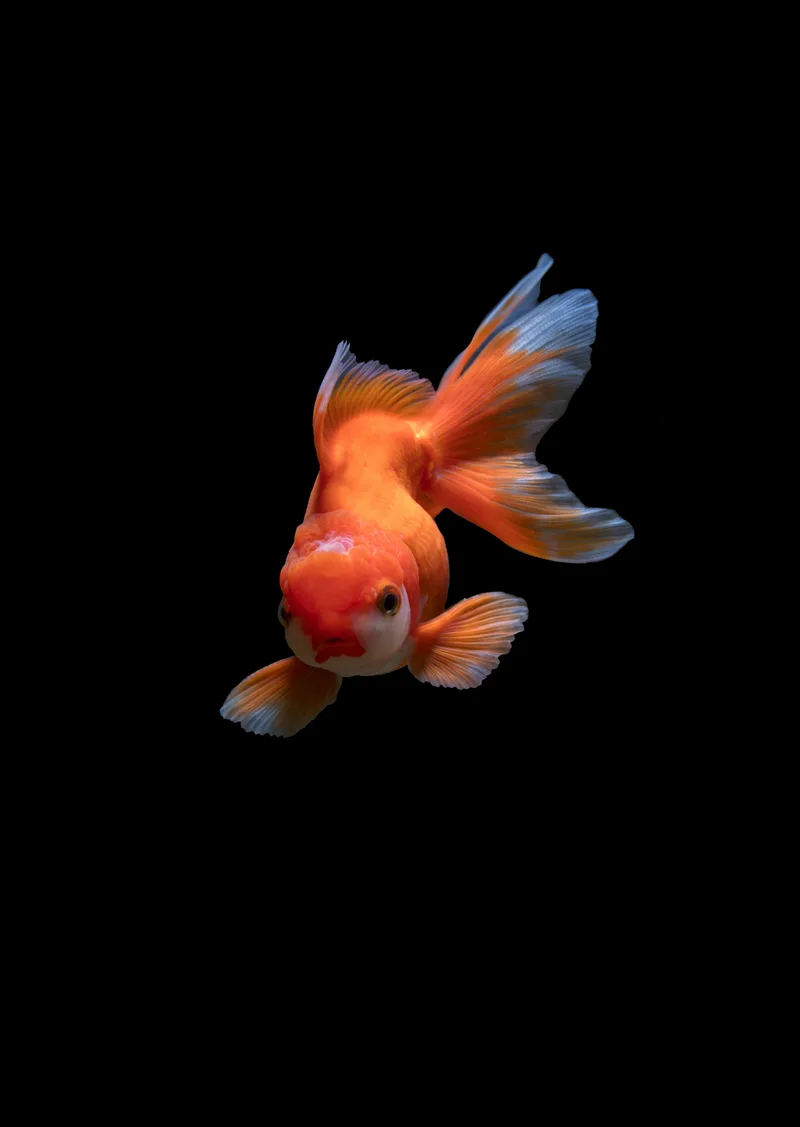
For a goldfish in a home tank, the floor is about 60°F (15°C). Below that, sustained, feeding becomes unreliable and trouble starts, and round-bodied fancy varieties need a few degrees more. Yet the same species survives entire winters in the upper 30s°F under pond ice. Those two facts only fit together once you see that a goldfish drifting into the 40s over a slow outdoor fall and one whose tank crashed to 55°F overnight are in completely different situations, even though the second number is higher. What decides your fish's safety is how cold, how fast, and which kind of goldfish you have.
What Are the Signs Your Goldfish's Water Is Already Too Cold?
Put a thermometer on the tank first. If it reads 65 to 72°F (18 to 22°C), you're in the comfortable range and whatever you're seeing probably isn't a temperature problem.
If the water is cooler than that, watch the fish. Some slowing down at the low end of the range is normal. A goldfish at 65°F swims a little less and eats a little more deliberately than one at 72°F, and that's fine. What you're looking for is the difference between a fish that has downshifted and a fish that has stalled:
- Reduced or absent appetite, ignoring food it would normally rush
- Resting motionless on the bottom or tucked into a corner for long stretches
- Fins clamped tight against the body instead of held open
- Slow, labored swimming, or drifting rather than swimming
- Little or no reaction when you approach the tank or drop food in
One of these on its own, on one cold morning, is worth watching. Several together, holding steady for a day or more, means the water is colder than your fish can comfortably run at and it's time to warm the tank.
What Should You Do If the Temperature Dropped Suddenly?
If a heater failed, the power went out, or a cold snap caught an unheated tank, the first thing to know is that how fast the water dropped matters more than the number on the thermometer. Goldfish handle a slow slide gracefully. A fall of several degrees in a few hours is a different event entirely, because the fish's body has no time to adjust its metabolism to match.
The instinct is to reheat fast. Don't. A rapid swing back up is a second shock stacked on the first. Get a working heater on the tank and bring the temperature up gradually, no more than a couple of degrees per hour, until you're back in the 65 to 72°F range.
Hold off on feeding until the fish is active and responsive again. In cold water a goldfish's digestion slows to the point where food can sit in the gut and rot instead of being processed, so a meal right now does more harm than good. Once the fish is cruising the tank and reacting to you, normal feeding can resume.
If this happened because the tank has no heater at all, it's worth settling whether a goldfish tank needs a heater in your home, because a room that dips hard at night will keep producing mornings like this one.
Does the Safe Minimum Change for Fancy Goldfish?
Yes, and by more than a little. The "goldfish are cold-hardy" reputation was earned by slender-bodied fish, the commons and comets built like their wild carp ancestors. Round-bodied fancy varieties like orandas, ranchus, and fantails carry the same organs a common goldfish does, compressed into a body half the length. That squashed layout leaves the swim bladder and gut with no room to spare, so when cold water slows digestion, fancies are the first to develop buoyancy trouble and constipation-like blockages.
For a common or comet, the practical tank floor is that 60°F line. For a fancy variety, hold the tank a few degrees higher and treat the mid 60s°F as the bottom of safe, with 68 to 74°F as the zone where they do best. A fancy goldfish sitting at 58°F isn't dying, but it's running its compressed digestive system at a temperature it wasn't shaped for, and problems tend to follow within days.
If you're not sure which side of that line your fish falls on, the difference between fancy and common goldfish comes down to body shape: a long, torpedo-shaped fish with a single tail fin is a common or comet, and an egg-shaped fish with flowing double fins is a fancy.
Why Can Goldfish Handle Cold So Much Better Than Most Aquarium Fish?
Goldfish are temperate fish, descended from wild carp that lived through real winters in ponds and slow rivers across East Asia. Unlike a tropical fish, whose body fails outright outside its narrow band, a goldfish's metabolism is built to scale with temperature. Cooler water means a slower heart rate, slower digestion, less movement, less food. The fish doesn't fight the cold. It turns itself down to match.
That dial keeps turning as the water cools. Around 50°F (10°C), digestion becomes so sluggish it stops being reliable, which is why pond keepers stop feeding well before the fish is in any actual danger. The fish can still survive far colder water than it can safely eat in.
Did you know? Wild carp relatives of the goldfish spend entire winters suspended in near-freezing water under pond ice, idling so completely it borders on torpor. It's the same metabolic trick your goldfish uses to shrug off a cool room, taken to its extreme.
This is also why the speed of a temperature change matters so much. Turning that metabolic dial takes time, days and weeks, not hours. A pond cooling from 60°F to 45°F across a month gives the fish room to downshift at every step. A tank falling from 72°F to 55°F overnight demands a shift the fish's body cannot make that fast, and the higher final number doesn't save it.
So the meaningful threshold was never a single number. It's the pairing of how cold and how fast. Keep a tank goldfish above 60°F, a fancy no lower than the mid 60s, and when you check the thermometer, check the trend too. A stable 66°F is a fine place for a goldfish to live. A tank that read 72°F yesterday and 62°F today has a problem the second reading alone would never show you.