What should you not feed goldfish?
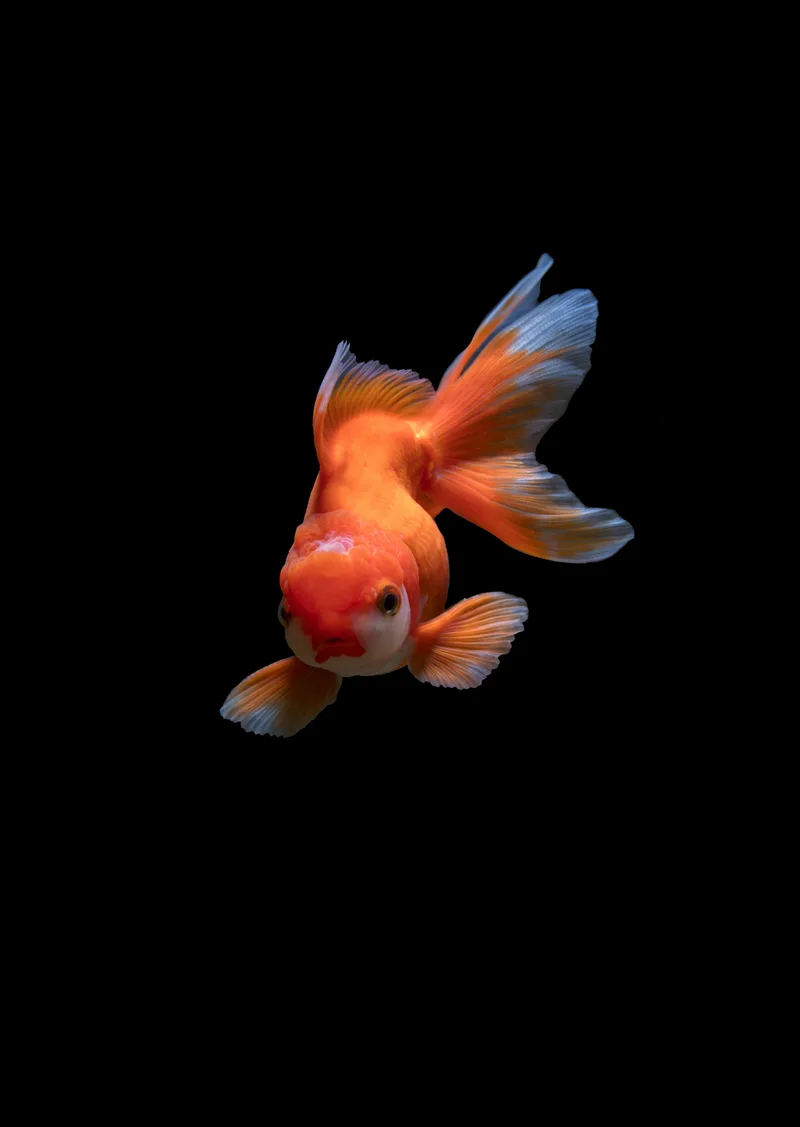
The food most likely to hurt your goldfish isn't anything labeled toxic. It's the pinch of bread you were about to drop in, or the flakes everyone starts with. The list to keep out of the tank is short: starchy and processed human food (bread, crackers, cereal, pasta, anything salted, oiled, or seasoned) plus two aquarium-aisle defaults that look perfectly safe, flake food and dry pellets dropped straight in from the tub. What ties them together is a goldfish's own plumbing: a gut that can't handle a slug of starch, and a body that gets into trouble with the air it gulps when it feeds at the surface.
Bread, crackers, and other starchy human food
This is the single most common mistake, and it's worth getting clear on first. Bread, crackers, breakfast cereal, cooked pasta, plain rice: all of it is starch, and a goldfish (Carassius auratus) is poorly built to deal with starch in any quantity.
A goldfish has no true stomach. Most fish have a stretchy, acidic stomach that holds a meal and breaks it down before it moves on. A goldfish doesn't. Food passes more or less straight into a long, slow gut that evolved for grazing all day on soft plants and small invertebrates, taking in a little at a time. Drop in a chunk of bread and you've handed that system something it can't process. The dry starch swells with water, sits in the gut, and ferments instead of feeding. What you see afterward is a constipated fish: trailing waste, a swollen belly, and often trouble holding itself level in the water.
The everyday culprits are exactly the things within arm's reach of the tank. A torn-off corner of sandwich bread. The end of a cracker. A few flakes of cereal a child wanted to share. None of them are poison, and a single accidental crumb won't kill a healthy fish. But none of them are food for a goldfish either, and fed with any regularity they cause real trouble.
Did you know? A goldfish's gut can be more than twice the length of its own body, coiled up inside it. That long, stomachless gut is the gut of a slow grazer, built to extract a little from a lot of plant matter over a whole day, not to handle a dense slug of starch all at once.
Salted, oiled, and seasoned leftovers
Anything that came off your plate prepared for a person is off the menu. Potato chips, fried or roasted meat, deli slices, buttered or seasoned vegetables, anything salted: it all causes problems a goldfish doesn't need.
Salt is the clearest one. A freshwater goldfish spends its whole life managing the balance of salts between its body and the water around it, pulling what it needs through its gills and dumping the excess through its kidneys. Its body is set up for the low-salt freshwater it lives in. A salty scrap throws extra load onto that system at exactly the point where it's already working full-time. Oil and grease bring their own problem: they don't dissolve, they float and coat the surface, and they foul the water as they break down. Seasonings and preservatives are simply chemicals a goldfish was never built to eat.
There's an easy rule that covers all of it: if it came off your plate, it doesn't go in the tank. You don't have to memorize a list of which leftovers are worse than others. Prepared human food, as a category, is for people.
Flake food
Flakes are the default almost everyone starts with, and they're worth a direct word. Nobody is poisoning a goldfish with flakes. The point is that a better-fitting option sits right next to them on the shelf.
Two things make flakes a poor match for a goldfish. The first is that they float and break apart, leaching much of their nutrition out into the water before the fish ever swallows them, so a lot of what you pay for goes into the filter rather than the fish. The second matters more: flakes sit on the surface, and a goldfish nipping food off the top gulps air along with every mouthful. A little swallowed air is normal. A fish that takes the bulk of its meals off the surface, day after day, is taking in air with every bite, and that extra air in the gut is one of the things that leaves a goldfish floating, sinking, or tipping after it eats.
This matters most for the round-bodied fancy varieties, whose deep, compressed bodies pack their organs into a tight space and leave very little room for error around the swim bladder. For them especially, a sinking food the fish takes calmly off the bottom is a better fit than flakes off the top. If you want the positive version of all this, the choices that actually suit a goldfish are laid out in what makes a good everyday goldfish diet.
Dry pellets dropped in straight from the tub
Pellets themselves are fine, and a good sinking pellet is one of the better staples you can feed. The trouble is in how they're fed. A hard, dry pellet that goes in straight from the tub keeps absorbing water after the goldfish swallows it, and it does most of its swelling inside the fish.
In the deep-bodied fancy varieties, that swelling has nowhere to go. An Oranda, a Ryukin, or a Fantail carries its organs crammed into a short, rounded body, and the swim bladder, the gas-filled organ that lets the fish hold its position in the water, sits right in the middle of the crowd. A pellet that swells against it can press it out of shape, and a fish that can't fine-tune its buoyancy floats up, sinks down, or rolls onto its side. The buoyancy trouble that sends owners into a panic is, more often than not, a feeding problem before it's anything else.
Two simple habits take most of the risk out of it. Soak dry pellets in a little tank water for a minute or two before feeding, so they do their swelling in the cup instead of in the fish. And choose sinking pellets over floating ones, which keeps the fish feeding calmly off the bottom rather than gulping at the surface. Common and comet goldfish, with their long, torpedo-shaped bodies, are far more forgiving here, but the soak-first habit costs nothing and helps every goldfish you keep.
Too much rich, high-protein, or sugary food
Some foods aren't wrong in a one-off but turn harmful when they become the everyday meal. High-protein formulas built on fishmeal, fatty foods, and sugary fruit all fall in this group: fine as a rare treat, a problem as the daily diet.
The reason comes back to what a goldfish is. It's a grazing omnivore that leans herbivore, a fish whose long gut is set up to work slowly through plant matter, not to process dense protein meal by meal. Many commercial foods are built protein-first, with fishmeal at the top of the ingredient list, because that suits a fast-growing predatory fish. It's the wrong shape for a goldfish. A steady diet that's too rich, too fatty, or too sweet outpaces what that slow gut can keep up with, and the result lands in the same familiar place: constipation and buoyancy trouble.
So treat the rich stuff as a treat. A little thawed bloodworm, a piece of fruit now and then: fine. The same things as the foundation of the diet, fed day in and day out, are not.
What to feed instead, and why the amount matters more than the food
Put the whole list back together and the positive picture is simple. The base is a quality sinking goldfish pellet, soaked before it goes in. Around that, blanched vegetables the fish can graze the way it's built to, with the occasional thawed frozen treat for variety. That's a diet that fits the animal.
A short list of safe staples to anchor it:
- Sinking goldfish pellets, soaked for a minute or two first
- Blanched peas with the skins slipped off, a reliable fix for a constipated, floaty fish
- Blanched leafy greens like spinach (the kind of slow-graze food the gut is built for)
- Occasional thawed bloodworms or daphnia, as a treat rather than a staple
- Gel food, which holds its nutrition together instead of leaching it into the water
And here is the part that takes the pressure off a worried owner. For a goldfish, how much and how often you feed does more damage than almost any single wrong food. A goldfish has no off switch and will keep eating long past what it needs, and the most common real harm in a home tank isn't a forbidden ingredient at all. It's simply too much food: the excess fouling the water and overloading a gut that was built to take in a little at a time. Once amount matters more than the specific food, the natural next question is how often a goldfish actually needs feeding. Get the staple right, keep the human food on your plate, and feed less than feels generous, and the avoid-list mostly takes care of itself.