What is the best diet for a goldfish?
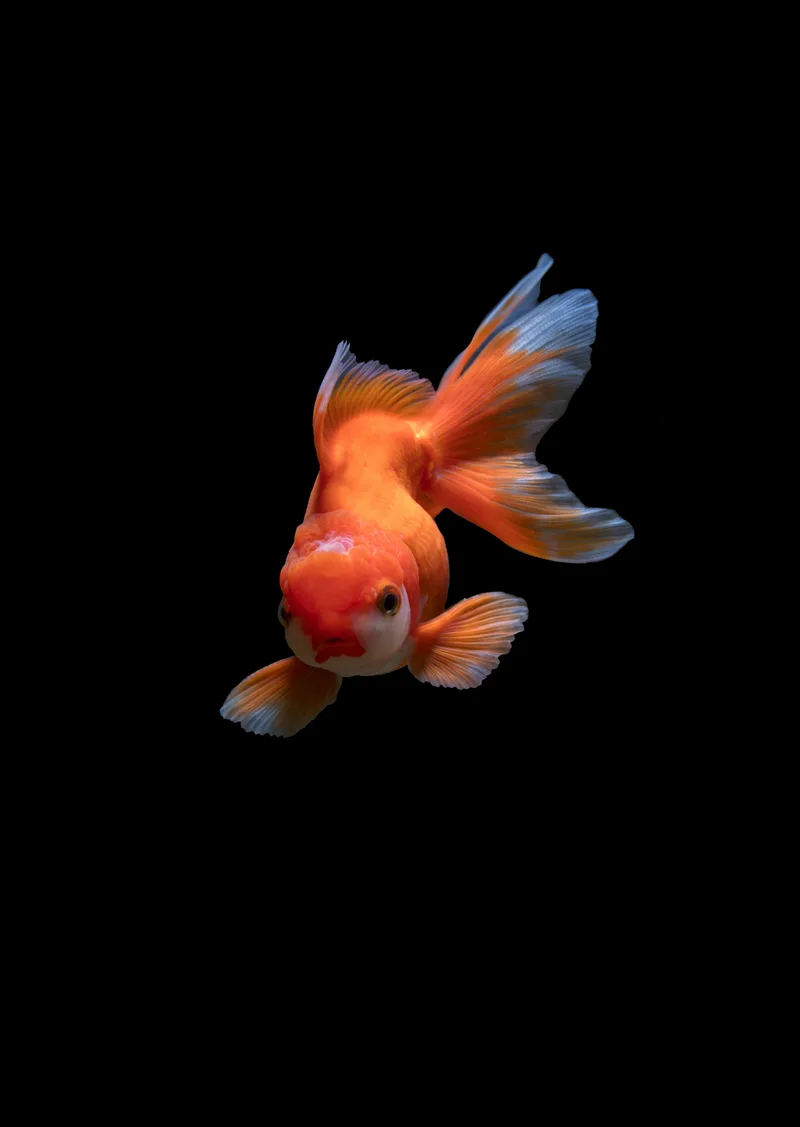
The best diet for a goldfish (Carassius auratus) is a quality sinking pellet or gel food made for goldfish, rounded out with vegetables a few times a week and the occasional protein treat, built as a steady variety rather than one "best" product. The thing that actually keeps a goldfish healthy is not which brand you buy, because a goldfish has no real stomach. Food passes more or less straight through a long gut built to graze on plants all day, and that single fact is why the floating flakes most people reach for cause the bloating and swim-bladder trouble fancy goldfish are famous for.
What Should You Actually Put in the Tank at Feeding Time?
Think of the diet as three tiers, with a good staple at the base and everything else arranged around it. You are not looking for one perfect food. You are putting together a mostly vegetable-leaning mix that matches how a goldfish eats in the wild, where it spends the day grazing on plants, algae, and the occasional small invertebrate.
The staple does the heavy lifting. A goldfish-specific sinking pellet or gel food is formulated with the lower protein and higher plant content a goldfish needs, and because it sinks, the fish can take it from the bottom or mid-water the way it naturally feeds. Around that staple, vegetables go in several times a week and a protein treat shows up now and then.
- Daily staple: a quality goldfish-specific sinking pellet or gel food, fed once or twice a day. This is the foundation of every feeding.
- Vegetables, several times a week: blanched (briefly boiled, then cooled) peas with the skins slipped off, spinach, zucchini, and shelled cucumber. Soft, easy to graze, and close to what a goldfish would crop in the wild.
- Protein treats, now and then: bloodworms, daphnia, or brine shrimp, fresh or frozen and fully thawed, no more than once or twice a week. Treats, not the main event.
Goldfish are omnivores, but in a home tank they do best leaning heavily toward the plant side of that. A shelled pea once or twice a week is one of the most useful things you can drop in the tank. If you want to widen the vegetable rotation, which vegetables are safe and how to prepare them is its own small subject worth getting right.
How Much and How Often Should You Feed?
Feed small amounts once or twice a day, and only as much as the fish clears in about two minutes. Anything still drifting around after that was too much. Scoop out the leftovers, and give a little less next time.
Leaning slightly under is the safer mistake. Overfeeding, not underfeeding, is what kills most goldfish, and it does it two ways. Uneaten food rots and fouls the water, and goldfish are heavy waste producers to begin with, so a tank already working hard to keep up tips over fast. The food that does get eaten, when there is too much of it, backs up a digestive system that was never built for big meals.
You can read the amount off the fish itself. A goldfish on the right diet has a firm, even body and passes normal, fairly compact waste that drops off cleanly. When the portions run too big, you start to see a bloated or lopsided belly, long trailing strings of waste, and food settling uneaten on the substrate. Those are your signals to cut back. If you want the frequency question pinned down on its own, how many times a day to feed a goldfish is worth settling once so you stop second-guessing it.
Why Do Goldfish Need So Many Vegetables?
The vegetables are not a garnish. They are the part of the diet that matches the animal's plumbing. A goldfish has no true stomach, no acidic holding tank that breaks down a big rich meal before passing it along. Instead it has a long, simple gut suited to a steady, plant-leaning trickle of food all day. Feed it the way it is built to eat and everything works. Feed it against that design and you get problems.
This is where the high-protein, high-fat foods go wrong. A goldfish gut has no good way to process a heavy, rich meal, so excess protein and fat sit and ferment, leading to constipation and the gas that follows it. Dry flakes add a second problem on top: they float, and a goldfish gulping at the surface swallows air with every mouthful. That swallowed air, combined with a backed-up gut, presses on the swim bladder, the gas-filled organ a fish uses to hold its position in the water. When it gets squeezed, the fish loses its balance and starts floating sideways, sinking, or bobbing at the surface. This shows up most in the round-bodied fancy varieties, whose compressed shape already crams those organs into a tight space.
Blanched vegetables and pre-soaked sinking food work with the anatomy instead of against it. Soft plant matter is exactly what that long gut is tuned to process, and food that is already waterlogged sinks, so the fish eats without gulping air. A pea earns its reputation here. It is gentle fiber that helps move a backed-up gut along, which is why so many keepers reach for a shelled pea the moment a goldfish starts floating oddly.
Did you know? A goldfish has no real stomach at all. Food passes more or less straight through its intestine, which is why steady small meals suit it far better than one big one. It also means a goldfish's poop is a surprisingly good window into whether the diet is working. Compact and clean means things are running right; long, pale, trailing strings mean it is time to ease off the rich food and add a pea.
Does the Best Diet Change for Common vs. Fancy Goldfish?
The same principles hold for both, but the margin for error narrows the rounder the fish gets. The split tracks body shape, and body shape is really about how much room those internal organs have to work.
The athletic single-tails, the common goldfish, comets, and shubunkins, have a long torpedo shape with room to spare inside. They handle a broader, slightly richer diet and tolerate more protein without much trouble. They are also fast, active fish that burn through what they eat.
The round-bodied fancies, orandas, ryukins, and fantails, are a different case. Generations of breeding for that deep, compressed shape have folded a normal-length gut into a much shorter, rounder body, leaving everything packed tight. A meal that a comet would clear without noticing can leave a ryukin constipated and tipping over. These fish need the careful version of the diet: sinking or fully soaked food so they never gulp air, a heavier lean on vegetables, and smaller, more frequent meals.
If a fancy is already showing buoyancy trouble, the diet is usually the first place to look, and the explicit list of foods to keep out of the tank saves you ruling them out one at a time. None of this is about chasing a perfect product. The best diet for a goldfish is a pattern, not a thing you buy: a steady, plant-leaning variety matched to how the fish is built to eat. Get that pattern right and a goldfish routinely outlives the bowl it was supposed to die in, often by a decade or more.