How to tell if a goldfish is hungry?
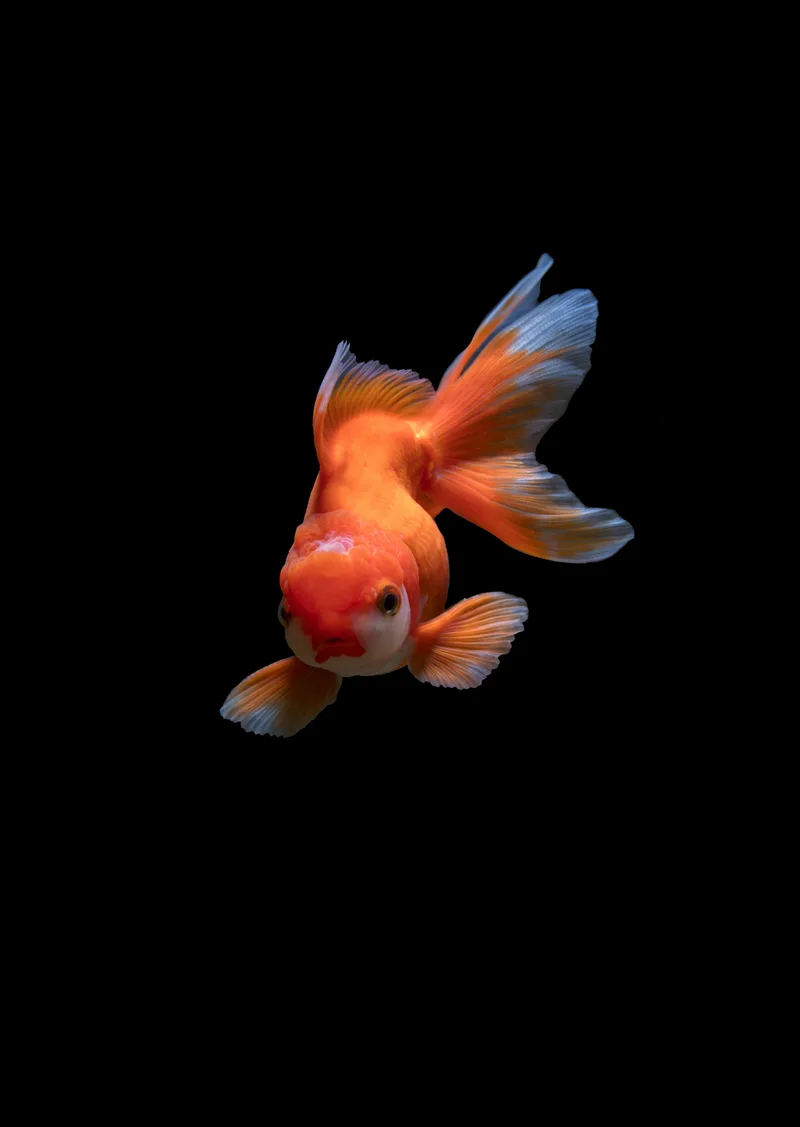
A healthy goldfish (Carassius auratus) acts starving all the time, and that constant begging tells you almost nothing about whether it's actually fed. It will mob the glass and comb the gravel minutes after a full meal, every day, for its whole life. The signal worth watching is the one that runs the other way: a goldfish that suddenly stops begging and ignores its food is the one to worry about. So the fish at the front of the tank looking desperate is almost certainly fine, and knowing how to read its body instead of its face is what stops the second-guessing for good.
Why Does My Goldfish Always Act Starving?
The begging is real, but it isn't a hunger gauge. A goldfish doesn't have a true stomach, just a simple gut tube that food moves through fairly quickly. There's no holding tank that fills up and tells the fish "you're full." So in the wild it grazes all day, picking at whatever's around, and in your tank it does the same thing whether or not it ate ten minutes ago.
On top of that, goldfish learn fast. It only takes a few days for one to connect "person at the glass" with "food about to drop in." After that, every time you walk past, it swims to the front and does the whole hungry act, because as far as it has learned, you showing up is the thing that comes right before dinner.
So the classic behaviors that send owners into a panic are usually just this. Picking at the gravel is foraging, the same scavenging it would do in a pond. Crowding the front of the tank when you approach is learned begging. Staring at you minutes after a meal is the fish playing the odds that food might appear again. None of it tells you the fish is underfed.
Did you know? That bottomless appetite is built into the plumbing. With no real stomach to hold a meal, a goldfish has no off switch for "full," so grazing constantly is just how the body is meant to run. A goldfish that looks satisfied would be the strange one.
So How Do I Actually Know If It's Fed Enough?
The body tells you what the behavior won't. The most reliable read is body condition. A well-fed goldfish is rounded and full through the belly, the "chunky" look it's supposed to have. One that looks thin or pinched around the belly, especially as the body narrows toward the tail, is probably getting too little.
The droppings are the second check, and an easy one once you know what to look for. A fish eating enough produces firm strands that carry the color of its food. Thin, pale, see-through strings that look hollow or empty are a sign of underfeeding.
Beyond that, watch for steady, normal activity and a fish that eats eagerly when food goes in and then settles back to cruising the tank. Here's the short version of what "fed right" looks like:
- A rounded, full belly rather than a thin or pinched one
- Calm, steady swimming through the day, not listless or hiding
- Firm droppings that carry the color of the food
- Eats keenly at feeding time, then drifts back to normal cruising
- Holds its weight and shape over weeks, neither thinning nor bloating
For portions, feed to the body and not to the begging. A good rule is to give only what the fish clears in a minute or two, once or twice a day, and walk away from the face at the glass asking for more. If you want a concrete number to start from rather than reading body condition, there's a sensible answer for how often a goldfish should eat that you can build a routine around.
When Should I Actually Worry It's Hungry, or Something Else?
The signal that matters runs the other way. A goldfish that stops coming up to feed, ignores food it used to chase, or visibly thins over weeks is the one to act on. By the time a fish has lost interest in eating, the cause is rarely plain hunger. It's usually something else: poor water quality, illness, or a cold-induced slowdown where chilly water has dropped its metabolism and appetite together. So the fix isn't more food. It's checking the tank.
It helps to split this into two cases. A fish that looks a little thin but still eats eagerly probably just needs a bit more food or an extra small feeding. A fish that has lost interest in food is a different problem. Stop feeding, since uneaten food only fouls the water, and start looking at causes. Test the water, check the temperature, and look the fish over for other changes. If your goldfish has gone off its food and you're trying to tell stress or illness from a simple bad day, the things a stressed goldfish shows you are the next thing to rule out.
For the everyday worry that brought most people here, though, the reassurance holds. With a goldfish, stop reading its face and start reading its body. A fish that begs is almost always a fish that's fine, and the day it stops begging is the day to actually pay attention.