How often should a goldfish eat?
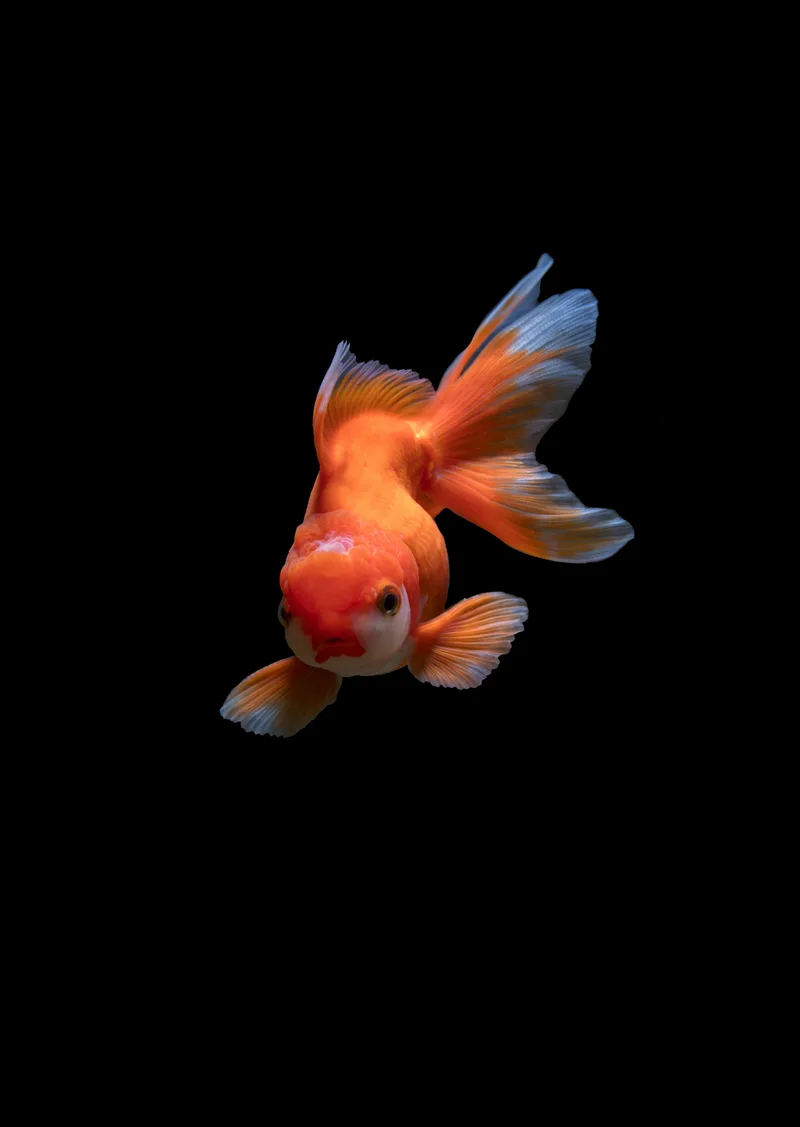
Feed an adult goldfish once or twice a day, and a young, still-growing one two or three times, giving only as much as the fish finishes in about a minute. Here's the part most schedules miss: the same goldfish (Carassius auratus) that wants two meals a day in a warm room may need almost nothing for days at a stretch when the water turns cold. A goldfish is a coldwater fish, and its appetite rises and falls with the temperature of the water around it. So the right feeding frequency tracks the tank's temperature, not the clock.
How Often Should I Actually Feed My Goldfish?
For most home tanks, once or twice a day covers an adult goldfish completely. A young fish that's still putting on size does better with two or three smaller feedings spread through the day, because growth burns through food faster than maintenance does.
The amount matters more than the count. Drop in only what your goldfish can clear in about a minute, then stop. Goldfish forage almost constantly in the wild, picking at the bottom and grazing on whatever they turn up, so a steady trickle of small meals suits them far better than one big serving.
You'll know you've got it right when the fish is actively searching the substrate at feeding time, there's no food left settling on the bottom a few minutes later, and the water stays clear between water changes. Those three signs together mean you're feeding enough and not too much.
- Adults: once or twice a day. Growing fish: two or three small feedings.
- The one-minute test: feed only what's eaten in about a minute, then stop.
- Scoop out anything left over so it doesn't rot in the tank.
- Skipping a day now and then is fine, and even good for the fish. A goldfish that misses a meal is in no danger.
Why Does Water Temperature Change How Often I Feed?
A goldfish doesn't make its own body heat. Its temperature is whatever the water's temperature is, and so is the speed of everything happening inside it. Digestion, metabolism, appetite: all of it runs on the warmth the fish borrows from the tank. This is the single biggest reason there's no one fixed feeding schedule that fits a goldfish year-round.
When the water is warm, the fish's metabolism speeds up. Food moves through faster, the fish burns energy quicker, and it genuinely needs more frequent small meals to keep up. When the water cools, the whole system slows down. A goldfish in cold water digests slowly, moves little, and wants very little food. Feed it on a warm-water schedule and most of that food goes uneaten and starts to rot.
This is the part that turns a feeding number into a rule you can actually use. You're not feeding to a calendar. You're feeding to the temperature of the water, adjusting up as it warms and down as it cools.
| Water Temperature | Rough Feeding Frequency |
|---|---|
| Below 50°F (10°C) | Little to none; the fish is barely active |
| 50–60°F (10–15°C) | Once or twice a week, small amounts |
| 60–68°F (15–20°C) | Once a day, or every other day |
| 68–74°F (20–23°C) | Once or twice a day |
| 74–80°F (23–27°C) | Two or three small feedings a day |
These are rough guides, not exact rules. Individual fish vary, and a fancy oranda sitting still in cool water needs less than an active comet in the same tank. Watch how keenly your fish takes food and let that fine-tune the numbers.
What Happens If I Overfeed My Goldfish?
Overfeeding is the most common feeding mistake, and the good news is it's both common and fixable. The trouble comes in two forms. The first is the water. Food the fish doesn't eat sinks, breaks down, and feeds a spike of ammonia that's toxic to the fish. Goldfish already produce a heavy waste load for their size, so a tank that's getting more food than it needs fouls quickly: cloudy water, a smell, and a fish under steady stress from the chemistry around it.
The second is the fish itself. A goldfish that eats too much, especially of dry pellets that swell with water, runs into digestive trouble. You'll see it as a fish that floats at the surface, sinks to the bottom and can't lift off, or rolls and struggles to stay upright. That's the swim bladder, the gas-filled organ that controls buoyancy, getting pressed on by a backed-up gut.
Did you know? A goldfish has no true stomach. Food passes through a fairly straight, simple gut rather than sitting in a stomach to be processed in batches. That's exactly why several small meals suit a goldfish better than one large one, and it's also why a goldfish almost always acts hungry: there's no full stomach sending the "stop" signal.
If you spot the signs, the fix is gentle and direct. Cut back the amount you're feeding, do a water change to clear out the fouled water and bring the ammonia down, and let the fish fast for a day or two so its gut can clear. A floating or sinking goldfish recovers more often than not once the load comes off its system.
How Can I Tell If My Goldfish Is Hungry or Just Begging?
A goldfish at the front glass, mouthing at you the moment you walk past, is not necessarily a hungry goldfish. Goldfish are foragers by nature and quick learners by temperament, and they readily connect a person at the glass with food arriving. What looks like desperate hunger is very often a habit the fish has trained you into, not a sign that it's underfed.
This is worth holding onto, because the begging is the thing that tips most owners into overfeeding. A goldfish that finished a proper meal an hour ago and is back at the glass looking for more is behaving completely normally. It isn't starving, and you don't need to feed it again. Genuine appetite shows up as a fish that searches the substrate and takes food keenly when it's offered, not simply as a fish that comes to the glass.
If you want to read the difference more closely, the specific cues that separate real hunger from learned begging come down to a handful of observable behaviors you can check at feeding time. The safest habit, in the end, is to feed small, regular meals matched to the water's temperature rather than to how often the fish pleads at the glass. Feed to the tank, not to the begging face, and a goldfish stays healthy across the full decade or more it's built to live.