Do goldfish have a 15 second memory?
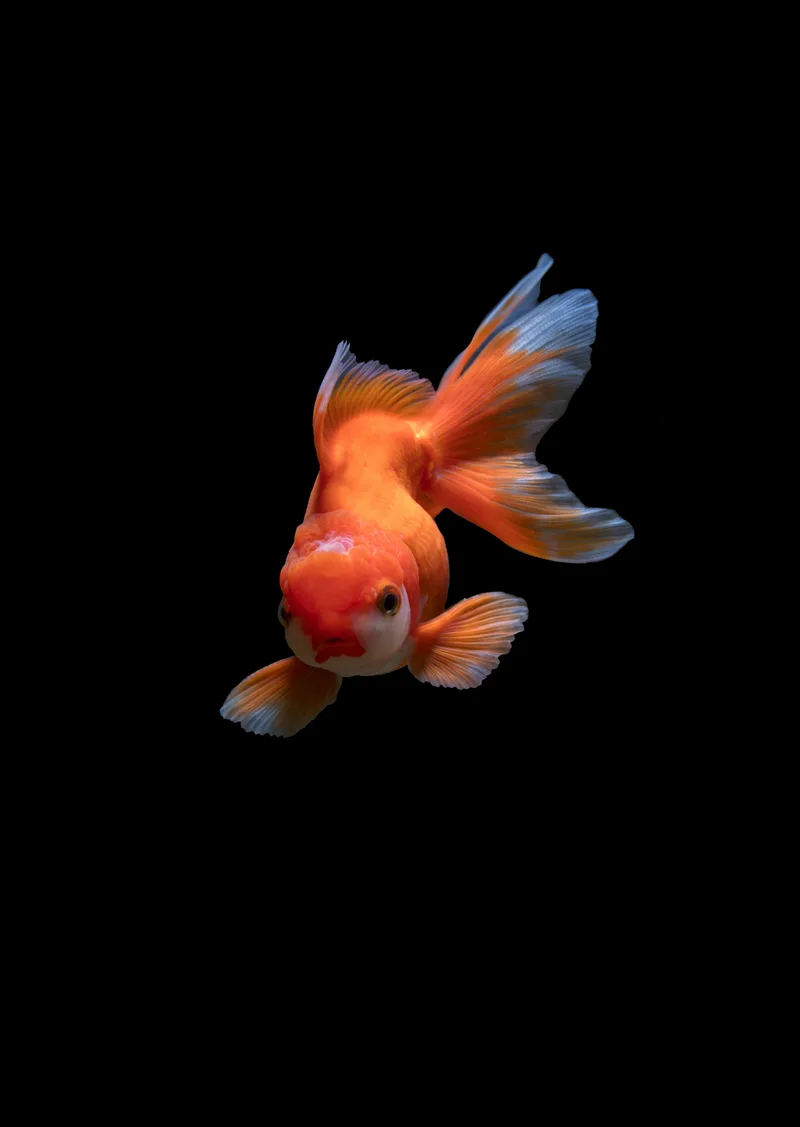
No. The idea that goldfish forget everything after fifteen seconds (or three, or five) has no scientific basis at all. Researchers have shown that goldfish can remember things for months, learn timed routines, and distinguish the person who feeds them from a stranger. The science is clear, the evidence is easy to see in your own tank, and the real question is why the myth stuck around as long as it did.
How Long Can Goldfish Actually Remember Things?
The real answer is months, not seconds. Goldfish are one of the most studied fish species in learning and memory research, and the results are not even close to the myth.
In one well-known experiment, researchers trained goldfish to press a lever to get food, but only at a specific time of day. The fish learned the schedule and retained it weeks later without any retraining. They weren't reacting on instinct. They were remembering when to show up.
In another study, young goldfish were trained to associate a particular sound with feeding. After being released, the fish returned to the feeding spot five months later when they heard that same sound played through an underwater speaker. Five months. Not five seconds.
These aren't outliers. Goldfish are a standard model organism in fish cognition research precisely because they learn reliably and retain what they learn. The fifteen-second claim doesn't just underestimate their memory. It gets the order of magnitude wrong by a factor of roughly a million.
Did you know? Goldfish trained to press a lever for food at a specific time of day remembered the schedule weeks later, returning to the lever at the right hour without any refresher training.
Can Goldfish Recognize Their Owners?
This is where the science meets something you can watch happen in your living room. Goldfish learn feeding routines quickly, and they associate the person who feeds them with food arriving.
You'll notice it as a pattern: your goldfish starts approaching the front glass when you walk into the room, following your movement along the tank. When someone unfamiliar approaches, the same fish may hang back or drift to the far side. That difference in response is learned recognition, not coincidence.
Over time, goldfish also become less skittish around familiar faces. A fish that hid behind the filter when you first brought it home will, after a few weeks of consistent feeding, swim right up to the glass before you've even reached for the food container. It has learned that you mean food and safety, not danger.
Goldfish recognize and respond differently to familiar people versus strangers, and it's one of the easiest memory-related behaviors to spot in a home tank.
What Does This Mean for Your Tank?
Knowing that your goldfish has a real, working memory changes what "good care" looks like in small but meaningful ways. A fish that remembers its routine benefits from having one.
- Keep a consistent feeding schedule. Goldfish learn when food arrives. A predictable routine helps them settle into the tank rather than spending energy on uncertainty.
- Rearrange decorations occasionally. New layouts give a fish that remembers its surroundings something to investigate. You don't need to redesign the tank, just move a plant or reposition a rock every few weeks.
- Vary the food. Alternating between pellets, flakes, and frozen or blanched vegetables gives your goldfish different textures and flavors to engage with, not just the same pellet every morning.
- Place the tank where household activity happens. A goldfish that can watch people move through the room has more stimulation than one facing a blank wall. They notice and respond to what's going on around them.
None of this is a care overhaul. It's small adjustments that respect what your fish is actually capable of.
Where Did the Short-Memory Myth Come From?
No study ever claimed goldfish have a three-second or fifteen-second memory. The number doesn't trace back to any research paper, any university, or any biologist. It most likely spread through jokes, movies, greeting cards, and the kind of "fun facts" that get repeated because they sound true and nobody checks.
The myth was also easy to believe because of how goldfish were kept. For decades, the default was a small, unfiltered bowl. Goldfish kept in bowls often died within weeks or months, which reinforced the idea that they were simple, disposable pets that couldn't think or feel much of anything. If the fish can't remember, keeping it in a bowl doesn't weigh on you.
The truth ran the other way. Goldfish in bowls died quickly not because they were fragile or simple, but because bowls are terrible environments: no filtration, no oxygen exchange, ammonia building with every feeding. The fish that "couldn't remember anything" was actually a cognitively capable animal in an environment that was slowly killing it.
The myth probably stuck because it was convenient. If goldfish can't remember, a bare bowl feels like enough. The fact that they can remember, learn, and recognize you isn't just interesting trivia. It's a reason to give them something worth remembering.